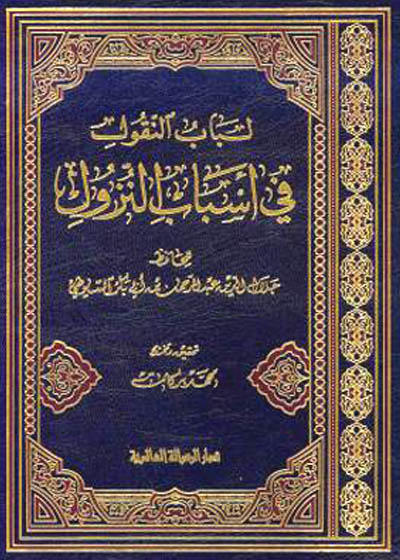
The Occasions of Revelation in the Quran
Introduction
The Quran was revealed to the Prophet Muhammad (ﷺ) over 23 years, addressing real-life events, questions, and challenges faced by the early Muslim community. Asbāb al-Nuzūl (أسباب النزول, “Occasions of Revelation”) refers to the historical contexts behind specific Quranic verses. Understanding these contexts is crucial for proper tafsir (exegesis) and applying Quranic teachings accurately.
This article explores:
✔ Definition & Importance of Asbāb al-Nuzūl
✔ Examples from the Quran
✔ Classical vs. Modern Approaches
✔ Books & Resources for Further Study
1. What is Asbāb al-Nuzūl?
Asbāb al-Nuzūl refers to the specific incidents, questions, or circumstances that led to the revelation of certain Quranic verses. These include:
-
Questions asked by the Sahabah (Companions)
-
Historical events (battles, treaties, etc.)
-
Responses to challenges from non-Muslims
Why is it Important?
-
Prevents misinterpretation (e.g., verses revealed for specific situations may have broader rulings).
-
Provides context for legal rulings (ahkam).
-
Deepens understanding of the Quran’s wisdom.
2. Examples of Asbāb al-Nuzūl
A. Surah Al-Ikhlāṣ (112) – Responding to Jewish & Polytheist Questions
-
Incident: The Quraysh asked the Prophet (ﷺ), “Describe your Lord’s lineage.”
-
Revelation: “Say: He is Allah, the One…” (Quran 112:1)
-
Significance: Affirms Allah’s absolute oneness.
B. Surah Al-Baqarah 2:144 – Changing the Qibla
-
Incident: Muslims initially prayed towards Jerusalem, but Allah commanded them to face the Kaaba.
-
Revelation: “Turn your face toward the Sacred Mosque…”
-
Significance: Tests the believers’ obedience.
C. Surah Al-Ma’idah 5:3 – The Last Revelation
-
Incident: Revealed during the Farewell Pilgrimage, days before the Prophet’s (ﷺ) death.
-
Revelation: “This day I have perfected for you your religion…”
-
Significance: Marks the completion of Islam.
3. Types of Asbāb al-Nuzūl
| Type | Description | Example |
|---|---|---|
| Direct Cause | A verse revealed due to a specific event | Surah Al-Lahab (111) – Abu Lahab’s opposition |
| General Guidance | Verses revealed without a single incident | Many laws in Surah Al-Baqarah |
| Multiple Causes | One verse linked to multiple incidents | Surah Al-Kawthar (108) – Multiple interpretations |
4. How Do We Know Asbāb al-Nuzūl?
The primary sources are:
-
Narrations from the Sahabah (e.g., Ibn Abbas, Aisha, Ubayy ibn Ka’b).
-
Books of Tafsir & Hadith (e.g., Bukhari, Tirmidhi, Ibn Kathir).
-
Dedicated Asbāb al-Nuzūl books (e.g., Al-Wahidi’s Asbāb al-Nuzūl).
Authenticity Check
Scholars evaluate narrations based on:
✔ Chain of narration (isnad)
✔ Consistency with Quranic principles
✔ Historical reliability
5. Classical vs. Modern Approaches
| Aspect | Classical Approach | Modern Approach |
|---|---|---|
| Sources | Relies on Hadith & early tafsir | Adds historical & linguistic analysis |
| Focus | Literal context | Sociopolitical implications |
| Example | Al-Wahidi’s Asbāb al-Nuzūl | Amin Ahsan Islahi’s Tadabbur-e-Quran |
6. Best Books on Asbāb al-Nuzūl
🔹 Classical Books
-
“Asbāb al-Nuzūl” – Al-Wahidi (Most comprehensive)
-
“Lubāb al-Nuqūl” – Al-Suyuti (Condensed version)
-
“Tafsīr Ibn Kathir” (Includes Asbāb al-Nuzūl)
🔹 Modern Books
-
“The Reasons for the Revelation” (Eng. trans. of Al-Wahidi)
-
“Quranic Sciences” – Subhi al-Salih (Academic analysis)
-
“The Study Quran” – Seyyed Hossein Nasr (Contextual notes)
🔹 Online Resources
-
Quran.com (Tafsir section)
-
Altafsir.com (Search by verse)
Conclusion
Studying Asbāb al-Nuzūl helps Muslims:
Understand the Quran’s wisdom in real-life situations.
Avoid misinterpretations by knowing the context.
Apply Quranic teachings more accurately today.