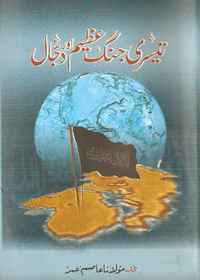

Dajjal the Quran and Awwal al-Zaman English Imran N Hosein
Dajjāl, the Qur’an and Awwal al-Zamān by Sheikh Imran N. Hosein is a unique scholarly analysis that connects the contemporary phenomenon of Al-Masīh ad-Dajjāl (The Anti-Christ) not just to the prophecies of the End Times (Ākhir al-Zamān), but also to the narrative of the Beginning of Time (Awwal al-Zamān), particularly the story of Adam and Iblīs. Sheikh Hosein argues that the Dajjāl’s deceitful methodology is a repetition of the primal evil that began with Iblīs’s rejection of Adam. He uses specific Qur’anic verses to establish a continuous chain of deception throughout history, emphasizing that the modern global order is the final stage of this ancient conflict. This book provides a deep theological and eschatological framework for understanding the Dajjāl as a figure embodying the ultimate manifestation of the original evil. It is a vital text for those seeking a Qur’an-based historical and prophetic perspective on the Dajjāl’s mission.
Additional information
| Book Writer | |
|---|---|
| Language | |
| File Size | 2 MB |
Description
Overview
Dajjāl, the Qur’an and Awwal al-Zamān by Sheikh Imran N. Hosein presents a profound exploration of the concept of Al-Masīh ad-Dajjāl, commonly known as The Anti-Christ. This scholarly work intricately weaves together the narratives of the End Times (Ākhir al-Zamān) and the Beginning of Time (Awwal al-Zamān), specifically through the lens of the story of Adam and Iblīs. Sheikh Hosein meticulously argues that the deceptive tactics employed by the Dajjāl are a continuation of the primordial evil instigated by Iblīs’s refusal to acknowledge Adam’s superiority. By referencing specific verses from the Qur’an, the author establishes a historical continuum of deception, illustrating how the modern global order represents the culmination of this ancient conflict.
Key Themes
This work provides readers with a comprehensive theological and eschatological framework for understanding the Dajjāl as a figure that epitomizes the ultimate expression of original sin. Sheikh Hosein’s analysis encourages a deeper contemplation of the spiritual and moral challenges faced by humanity today, linking them to the timeless struggles identified in Islamic teachings. This book serves as a crucial resource for those interested in a Qur’an-based interpretation of history and prophecy, offering insights into the implications of the Dajjāl’s mission in contemporary society.
- Students and scholars of Islamic theology and eschatology.
- Individuals seeking a deeper understanding of the Dajjāl in relation to Qur’anic teachings.
- Readers interested in the connections between historical events and prophetic narratives.
- Anyone looking to explore the philosophical and moral implications of contemporary global issues.
- Those seeking guidance on navigating the challenges posed by modernity through an Islamic lens.