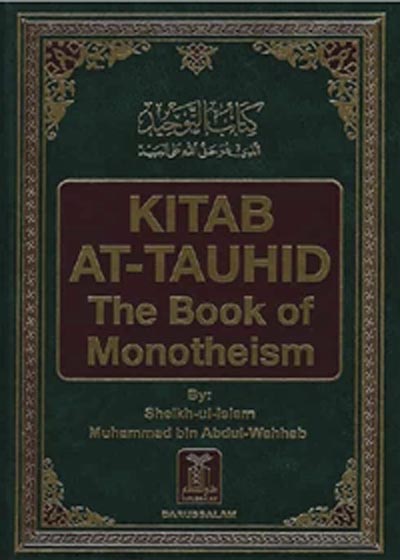
Kitab ul-Tawheed English Muhammad ibn Abd al-Wahhab
“Kitab ut-Tawheed” by Imam Muhammad ibn Abd al-Wahhab is the foundational text explaining the core Islamic concept of pure monotheism (Tawheed). The book uses Quranic verses and authentic Prophetic narrations across its chapters to define the categories of Tawheed and systematically expose all forms of Shirk (polytheism). It remains the most widely studied and definitive work on purifying worship and upholding the exclusive right of Allah to be worshipped.
Additional information
| Book Writer | |
|---|---|
| Language | |
| File Size | 11 MB |
Description
Overview
“Kitab ul-Tawheed,” authored by the esteemed scholar Imam Muhammad ibn Abd al-Wahhab, stands as a monumental work in Islamic literature, delving deep into the essence of Tawheed, or monotheism. This book serves as a pivotal reference for understanding the fundamental belief in the oneness of Allah, emphasizing the distinction between pure worship and the dangers of Shirk, or polytheism. Through a meticulous examination of Quranic verses and authentic Hadith, Imam al-Wahhab articulates the various categories of Tawheed, guiding readers towards a clearer understanding of Islamic monotheism and the significance of maintaining sincere worship directed solely to Allah.
Key Themes
The text is structured to not only define Tawheed but also to highlight the practical implications of its principles in the life of a believer. It systematically addresses common misconceptions and practices that may lead to Shirk, providing a comprehensive framework for purifying one’s faith. As a widely studied and respected work, “Kitab ul-Tawheed” remains an essential resource for anyone seeking to deepen their understanding of Islamic monotheism and its vital role in the practice of faith.
- Students and scholars of Islamic theology looking for foundational texts on Tawheed.
- Muslims seeking to enhance their understanding of monotheism and its implications in daily worship.
- Anyone interested in the historical development of Islamic thought regarding Shirk and Tawheed.
- Individuals looking to purify their worship and strengthen their relationship with Allah.
- Community leaders and educators aiming to impart accurate Islamic teachings on monotheism.