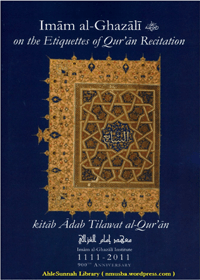
The Etiquettes of Quran Recitation Muhammad Abul Quasem
This is the first complete English translation of the ninth ‘Book’ of Imam al-Ghazali’s seminal work, Ihya’ ‘Ulum al-Din (The Revival of the Religious Sciences). Translator Muhammad Abul Quasem presents al-Ghazali’s elaborate and systematic Sufi approach to reciting the Qur’an. It details both the external rules (like ritual purity and posture) and, crucially, the internal contemplation required for a perfect recitation. The text explains that true reading is an act of worship aimed at understanding divine guidance, emphasizing deep reflection to overcome obstacles to correct comprehension.
Additional information
| Book Writer | |
|---|---|
| Language | |
| File Size | 9 MB |
Description
Overview
“The Etiquettes of Quran Recitation” by Muhammad Abul Quasem is a remarkable and essential text that serves as the first complete English translation of the ninth ‘Book’ of Imam al-Ghazali’s monumental work, “Ihya’ ‘Ulum al-Din” (The Revival of the Religious Sciences). This translation not only preserves the depth and richness of al-Ghazali’s original teachings but also makes them accessible to a wider audience. The author, Muhammad Abul Quasem, presents a comprehensive exploration of the etiquettes surrounding the recitation of the Qur’an, offering both external guidelines and internal contemplative practices that enhance the spiritual experience of reading the holy text.
Key Themes
In this enlightening work, al-Ghazali emphasizes that reciting the Qur’an is not merely a mechanical act but a profound act of worship that requires sincerity and intention. The book outlines important external rules, such as maintaining ritual purity and adopting the correct posture during recitation. More importantly, it delves into the internal dimensions of recitation, urging readers to engage in deep reflection and contemplation to truly grasp the divine meanings and messages contained within the Qur’an. This transformative approach aims to cultivate a deeper connection with the sacred text and encourages readers to overcome barriers that hinder their understanding of divine guidance.
- Spiritual seekers wishing to deepen their connection with the Qur’an.
- Students and scholars of Islamic studies looking for a comprehensive understanding of Qur’anic recitation etiquette.
- Practitioners of Sufism who aim to incorporate deep contemplation into their spiritual practices.
- Muslims seeking to enhance their recitation skills and understanding of the Qur’an.
- Anyone interested in the teachings of Imam al-Ghazali and their relevance in contemporary spiritual practice.