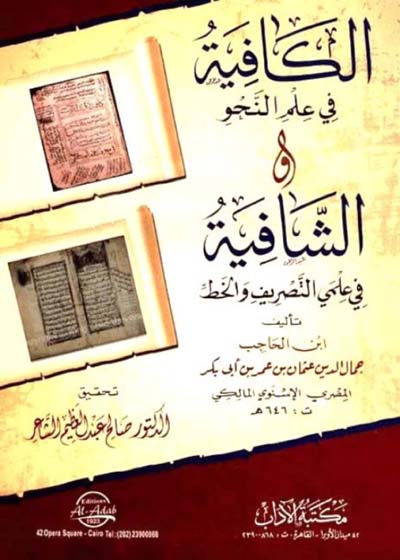
Ibn al-Hajib-Jamal al-Din Uthman ibn Umar ibn Abi Bakr al-Misri al-Isnawi al-Maliki
Ibn al-Hajib, also known as Jamal al-Din Uthman ibn Umar al-Maliki ابن الحاجب، جمال الدين عثمان بن عمر بن أبي بكر المصري الإسنوي المالكي, stands as one of the most influential figures in the history of Arabic linguistics and Maliki jurisprudence. Renowned for his analytical precision and mastery of logic, he revolutionized the study of the Arabic language with his foundational works, Al-Kafiya (on syntax) and Al-Shafiya (on morphology). These texts became the standard curriculum in Islamic education for centuries, celebrated for their concise yet exhaustive definitions. Beyond linguistics, his expertise in Maliki Fiqh is immortalized in his legal compendium, Jami’ al-Ummahat, which distilled complex legal precedents into a structured framework. Ibn al-Hajib’s legacy is defined by his unique ability to blend the rigors of grammatical science with the depths of legal theory, making his scholarship an indispensable bridge for understanding the classical Islamic intellectual tradition.
Showing all 2 resultsSorted by latest
 Ilm Aswat-Sarf-Nahw
شرح الوافية نظم الكافية- أبو عمرو عثمان بن الحجاب النحوي
- Ilm Aswat-Sarf-Nahw
الكافية في علوم النحو والشافية في علمي التصريف والخط-ابن الحاجب