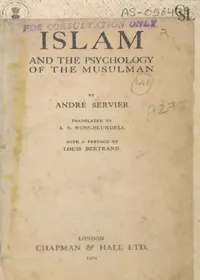
Islam And The Psychology Of The Musulman English Andre Servier
Islam And The Psychology Of The Musulman-André Servier’s controversial 1924 work offers an unflinching, historical-psychological critique of Islam and its impact on Muslim societies. The author argues that Islamic doctrine fundamentally shapes the psychology and personality of the believer, leading to intellectual stagnation and an inability to adapt to modern life. Servier provides a short history of Islam through a colonial lens, examining the influence of Arabian culture on the faith’s development. This is a significant, yet highly Eurocentric and polemical text, reflecting early 20th-century Orientalist views on the Muslim world. It remains a key document for studying the historical perception of Islam in the West.
Additional information
| Book Writer | |
|---|---|
| Language | |
| File Size | 30 MB |
Description
Overview
“Islam And The Psychology Of The Musulman” is a thought-provoking and contentious work by André Servier, published in 1924. In this book, Servier embarks on a historical-psychological exploration of Islam, offering a critique that examines how Islamic doctrine influences the psyche and personality of its adherents. He posits that the tenets of Islam contribute to a state of intellectual stagnation among believers, which, according to him, hinders their ability to adapt to the rapid changes of modern life. The author presents a concise history of Islam through a colonial perspective, shedding light on how Arabian cultural elements have shaped the faith throughout its evolution. While the text is undeniably significant in historical discourse, it is essential to approach it with an awareness of its Eurocentric and polemical nature, as it embodies early 20th-century Orientalist interpretations of the Muslim world.
Key Themes
Servier’s analysis delves into various themes, including the psychological impact of religious beliefs, the historical development of Islamic societies, and the interplay between faith and modernity. His work serves as a crucial document for those interested in understanding the early Western perceptions of Islam and its followers, as well as the broader implications of these views on contemporary discussions surrounding the religion.
- Students and scholars of Islamic studies seeking to understand historical critiques of Islam.
- Individuals interested in Orientalist literature and its impact on Western perceptions of the Muslim world.
- Researchers examining the psychological dimensions of religious belief and cultural identity.
- Those exploring the historical context of colonial attitudes towards non-Western societies.
- Readers seeking to engage with controversial perspectives in the discourse on Islam and modernity.