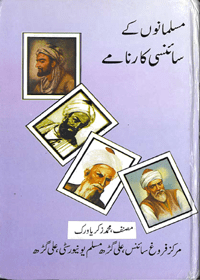
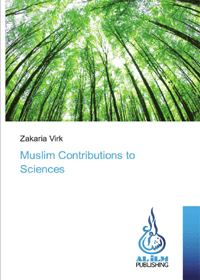
Muslim Contributions to Science English Zakaria Virk
Muslim Contributions to Science by Zakaria Virk is a comprehensive historical work that highlights the pivotal role of Islamic civilization during the Golden Age (8th-12th centuries CE) in advancing various scientific fields. The book documents significant breakthroughs by Muslim scholars in Mathematics (especially Algebra by Al-Khwarizmi), Medicine (establishment of hospitals, surgery, antiseptics), Astronomy (celestial observations, naming of stars), and Optics (Ibn al-Haytham). Virk emphasizes how these scholars perfected the Scientific Method through empirical observation and experimentation. The work serves to restore and credit the original intellectual advancements made in the Muslim world that later became the foundation for the scientific renaissance in Europe.
Additional information
| Book Writer | |
|---|---|
| Language |
Description
Overview
“Muslim Contributions to Science” by Zakaria Virk is an enlightening exploration of the remarkable achievements of Muslim scholars during the Golden Age of Islam, spanning the 8th to 12th centuries CE. This meticulously researched work sheds light on the invaluable contributions made by Islamic civilization to various scientific disciplines, showcasing how these advancements laid the groundwork for future developments in Europe and beyond. Virk’s narrative emphasizes the innovative spirit of Muslim thinkers who not only made significant discoveries but also refined the Scientific Method through rigorous empirical observation and experimentation. By highlighting these historical achievements, the book seeks to restore the rightful recognition of the Muslim world’s pivotal role in the history of science.
Key Themes
Throughout the text, readers will discover the profound impact of Muslim scholars in key fields:
- Mathematics: The groundbreaking work of Al-Khwarizmi in Algebra, which introduced essential mathematical concepts still in use today.
- Medicine: The establishment of early hospitals, advancements in surgical techniques, and the introduction of antiseptics that revolutionized healthcare.
- Astronomy: The meticulous celestial observations made by Muslim astronomers and their contributions to the naming of stars.
- Optics: The pioneering studies of Ibn al-Haytham, who laid the foundations for modern optics through his experiments and theories.
This book is not only a tribute to the intellectual heritage of the Islamic world but also a vital resource for those seeking to understand the interconnectedness of cultures in the advancement of human knowledge.
Who Will Benefit from This Book:
- Students and scholars of history and science looking to understand the contributions of Islamic civilization.
- Educators seeking comprehensive resources to teach about the Golden Age of Islam.
- Researchers interested in the development of scientific methodologies and their historical context.
- General readers who wish to appreciate the rich intellectual heritage of the Muslim world.