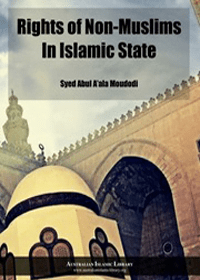
Rights of Non-Muslims in Islamic State Maulana Abul Ala Maududi
Maulana Abul Ala Maududi’s treatise “Rights of Non-Muslims in Islamic State” provides a rigorous constitutional framework that defines the legal and social status of non-Muslim citizens (Dhimmis) under Islamic governance, ensuring their protection and religious freedom. The book meticulously outlines how an Islamic state guarantees the safety of life, property, and honor for its minority populations, grounding these assurances in divine law rather than fluctuating political whims. By distinguishing between the rights of all citizens and the specific responsibilities of the ruling ideological body, Maududi offers a scholarly defense of Islamic pluralism that seeks to balance theological integrity with a just and compassionate administrative system.
Additional information
| Book Writer | |
|---|---|
| Language | |
| File Size | 1 MB |
Description
Overview
Maulana Abul Ala Maududi’s treatise “Rights of Non-Muslims in Islamic State” is a pivotal work that articulates the constitutional dynamics of an Islamic state, particularly regarding its treatment of non-Muslim citizens, known as Dhimmis. This book serves as a comprehensive guide to understanding the legal and social frameworks that ensure the protection of minority rights within an Islamic context. Maududi meticulously delineates the principles that underpin the rights of non-Muslims, emphasizing that their safety, dignity, and freedom of religion are guaranteed by divine mandates rather than subject to the caprices of political authority. Through his scholarly examination, he advocates for a system that not only respects religious diversity but also integrates it into the broader fabric of Islamic governance.
Key Themes
This insightful work highlights several key themes essential to understanding the rights of non-Muslims in an Islamic state:
- Legal Framework: A detailed exploration of the constitutional rights afforded to non-Muslim citizens.
- Protection of Rights: Assurance of safety regarding life, property, and personal honor for all citizens.
- Religious Freedom: A commitment to uphold the religious practices and beliefs of non-Muslims.
- Islamic Pluralism: A scholarly defense of the coexistence of different faiths within an Islamic society.
- Divine Law vs. Political Authority: The distinction between rights grounded in divine law and those influenced by political changes.
This book is particularly beneficial for:
- Students of Islamic studies seeking a deeper understanding of minority rights.
- Scholars and researchers examining Islamic governance and pluralism.
- Policy makers interested in the integration of diverse communities within Islamic frameworks.
- Activists advocating for religious freedom and minority rights in various contexts.
- General readers looking to grasp the principles of coexistence in Islamic societies.