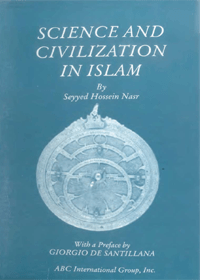
Science and Civilization in Islam English Seyyed Hossein Nasr
Science and Civilization in Islam by Seyyed Hossein Nasr offers a monumental perspective, presenting Islamic science not as a mere predecessor to Western thought but as an integral and spiritual component of Islamic civilization. Nasr argues that Islamic science was fundamentally structured by the principle of Tawhid (Divine Unity), interconnecting all fields—from cosmology and philosophy to mathematics, astronomy, and medicine—with the sapiential (wisdom) tradition. The book provides a morphological and historical analysis, utilizing original texts to demonstrate that the aim of these sciences was ultimately to contemplate Divine Unity through the study of nature. It uniquely positions Islamic science within a traditionalist framework, stressing its contemplative nature over modern, purely rationalistic approaches.
Additional information
| Book Writer | |
|---|---|
| Language | |
| File Size | 8 MB |
Description
Overview
“Science and Civilization in Islam” by Seyyed Hossein Nasr is a profound exploration of the rich tapestry of Islamic science, illustrating its significance as a foundational element of Islamic civilization rather than merely a precursor to Western intellectual traditions. Nasr’s work delves into the intricate relationship between science and spirituality, positing that Islamic science is deeply rooted in the principle of Tawhid (Divine Unity). This seminal text underscores how various disciplines—ranging from cosmology and philosophy to mathematics, astronomy, and medicine—are interconnected through a sapiential tradition that seeks to reflect upon the Divine through the study of the natural world.
In this comprehensive analysis, Nasr employs a historical and morphological approach, referencing original texts to showcase the ultimate purpose of Islamic sciences: the contemplation of Divine Unity. By positioning Islamic science within a traditionalist framework, he emphasizes its contemplative essence, contrasting it with contemporary, rationalistic methodologies. This book is not merely an academic treatise; it is a call to recognize the spiritual dimensions of knowledge and invites readers to appreciate the holistic nature of Islamic intellectual heritage.
Key Themes
- Interconnection of various scientific fields through the principle of Tawhid.
- Historical analysis of Islamic science and its foundational texts.
- Emphasis on the contemplative nature of science in the Islamic tradition.
- Critique of modern rationalistic approaches to knowledge.
- Contribution to understanding the spiritual dimensions of scientific inquiry.
Who This Book Benefits
- Students and scholars of Islamic studies and history.
- Individuals interested in the philosophy of science and its spiritual implications.
- Educators seeking to incorporate a holistic understanding of science in their curriculum.
- General readers looking to deepen their appreciation of Islamic intellectual traditions.
- Anyone aiming to explore the relationship between faith and reason in the context of science.