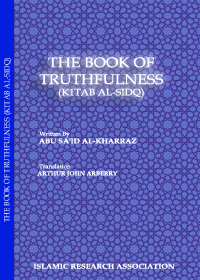
The Book of Truthfulness (Kitab al-Sidq) Abu Said al-Kharraz
“The Book of Truthfulness (Kitab al-Sidq)” by the early Sufi master Abu Sa’id al-Kharraz (d. 899 CE) is considered a foundational text in Islamic mysticism (Tasawwuf), uniquely focusing on sincerity (sidq) as the cornerstone of the spiritual path. Al-Kharraz systematically details how truthfulness must manifest in every aspect of a believer’s life—from their inner conviction (Ikhlas) to their outward actions—to achieve true proximity to God. The book provides practical steps for self-purification (Tazkiyat al-Nafs) and is highly valued by scholars for maintaining the balance between Sufi experience and strict adherence to the Sharia, making it a vital resource for understanding early Islamic spirituality and ethics.
Additional information
| Book Writer | |
|---|---|
| Language | |
| File Size | 6 MB |
Description
Overview
“The Book of Truthfulness (Kitab al-Sidq)” by Abu Sa’id al-Kharraz is an essential work in the realm of Islamic mysticism, penned by one of the early Sufi masters in the 9th century. This profound text delves deeply into the concept of truthfulness, or “sidq,” positing it as the fundamental principle upon which the spiritual journey is constructed. Al-Kharraz emphasizes that sincerity is not merely a personal virtue, but a necessary condition for achieving a genuine connection with the Divine. The teachings in this book outline how truthfulness should permeate both the inner beliefs of an individual and their outward behaviors, guiding them toward a life of integrity and spiritual fulfillment.
Key Themes
In “The Book of Truthfulness,” al-Kharraz systematically explores the significance of truthfulness in various dimensions of life. He provides a roadmap for self-purification (Tazkiyat al-Nafs), offering practical steps that are essential for anyone seeking to align their actions with their beliefs. The text is revered for its balanced approach, harmonizing the experiential aspects of Sufi practice with the rigorous adherence to Islamic law (Sharia). This makes it a vital resource for those looking to deepen their understanding of early Islamic spirituality and ethics.
- Spiritual seekers aiming to cultivate sincerity in their lives.
- Students of Sufism and Islamic mysticism looking for foundational texts.
- Scholars interested in the intersection of Sufism and Islamic law.
- Anyone seeking practical guidance on self-purification and ethical living.
- Readers wanting to explore the teachings of early Islamic spiritual masters.