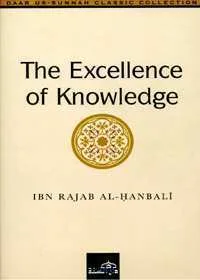
The Excellence of Knowledge English Ibn Rajab al-Hanbali
The Excellence of Knowledge is a concise yet profound treatise by the renowned Hanbali scholar, Ibn Rajab al-Hanbali (d. 795H). The full title, The Virtue of the Salaf over the Khalaf, highlights its core theme: the author contrasts the deep, practical understanding of the early Muslims (Salaf) with the excessive theoretical discourse of later generations (Khalaf). Translated into English by Abu Rumaysah, the book emphasizes that true knowledge is beneficial—it leads to piety and action—while other forms of knowledge, like excessive debate or delving into speculative theology, are unproductive. It guides the reader to seek the praiseworthy knowledge that increases fear of Allah and corrects the heart.
Additional information
| Book Writer | |
|---|---|
| Language | |
| File Size | 5 MB |
Description
Overview
The Excellence of Knowledge is a concise yet profound treatise by the esteemed Hanbali scholar, Ibn Rajab al-Hanbali (d. 795H). This significant work, formally titled The Virtue of the Salaf over the Khalaf, delves into the contrasting approaches to knowledge between the early generations of Muslims, known as the Salaf, and later scholars referred to as the Khalaf. Ibn Rajab emphasizes that the early scholars possessed a deep, practical understanding of the faith, which was deeply rooted in piety and action, as opposed to the excessive theoretical debates that often characterize later scholarship. Through this treatise, the author guides readers toward the pursuit of knowledge that is not only informative but transformative, leading to a sincere fear of Allah and a rectification of the heart.
Key Themes
This enlightening work underscores several vital themes, including:
- The distinction between beneficial knowledge and mere theoretical discourse.
- The importance of following the methodology of the Salaf in seeking knowledge.
- The role of knowledge in fostering piety and righteous action.
- The dangers of excessive debate and speculative theology that distract from the core tenets of faith.
- A call to cultivate a heart that is aligned with the teachings of the Quran and Sunnah.
This book is particularly beneficial for:
- Students of Islamic knowledge seeking to understand the value of practical learning.
- Scholars and educators who wish to emphasize the importance of the Salaf’s approach to knowledge.
- Laypersons striving to deepen their faith and understanding of Islam.
- Anyone interested in the history of Islamic thought and its evolution over the centuries.
- Readers looking to cultivate a heart that is conscious of Allah and dedicated to righteous actions.