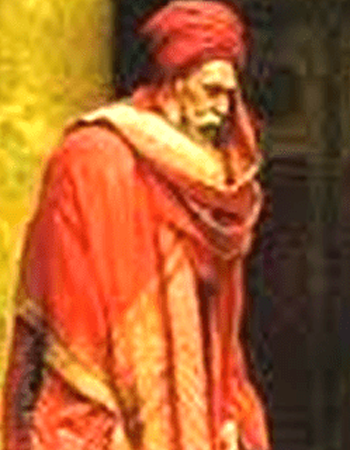
Imam Muhammad ibn Ismail al-Bukhari (810–870 CE) stands as one of the most distinguished scholars in Islamic history. Renowned for his extraordinary memory, meticulous methodology, and vast erudition, he compiled Sahih al-Bukhari, widely accepted across Sunni Islam as the most authentic collection of Prophetic traditions (Hadith) after the Quran.
Early Life & Education
Born in Bukhara (present-day Uzbekistan), Imam Bukhari lost his father at a young age and was raised by his mother. He demonstrated a remarkable aptitude for Islamic jurisprudence and Hadith memorization early in childhood, memorizing thousands of narrations before reaching his teenage years.
To gather and verify Hadith, he embarked on extensive journeys across major centers of learning in the Islamic world, including:
Makkah and Madinah: Deepening his study of jurisprudence and Hadith transmission.
Baghdad, Basra, and Kufa: Engaging with the prominent scholars of Iraq.
Syria and Egypt: Verifying narrations and studying local chains of transmission (isnad).
Major Works & Scholarly Contributions
Imam Muhammad ibn Ismail al-Bukhari (194–256 AH / 810–870 CE) is credited by the classical biographers with roughly two dozen titles, but only a handful survive in print today. Here’s the reliable picture, sorted by how firmly they’re attributed and whether they still exist.
His major extant works — securely attributed:
Al-Jami’ al-Sahih (الجامع الصحيح) — his masterpiece, universally known as Sahih al-Bukhari. This is the work his name is synonymous with.
Al-Adab al-Mufrad (الأدب المفرد) — a standalone collection of hadith on manners, character, and social etiquette. Widely printed and studied in its own right.
Al-Tarikh al-Kabir (التاريخ الكبير) — “The Great History,” a massive biographical dictionary of hadith narrators. One of the foundational works of the rijal (narrator-criticism) science.
Al-Tarikh al-Awsat (التاريخ الأوسط) — “The Middle History,” a shorter chronological narrator-history. Note the tangle here: much of what was printed for years under the title al-Tarikh al-Saghir (“The Small History”) is now generally understood to actually be al-Tarikh al-Awsat, so treat those two titles as closely linked rather than clearly separate works.
Lesser-known works that survive and are attributed to him:
Khalq Af’al al-‘Ibad (خلق أفعال العباد) — a creedal/theological treatise on the createdness of human actions, written against the Jahmiyya.
Raf’ al-Yadayn fi al-Salat (رفع اليدين في الصلاة) — a juristic monograph arguing for raising the hands in prayer, marshalling the relevant hadith.
Al-Qira’a Khalf al-Imam (القراءة خلف الإمام) — a companion juristic treatise on reciting behind the imam in congregational prayer.
Al-Du’afa al-Saghir (الضعفاء الصغير) — “The Small Book of Weak Narrators,” a concise rijal work listing transmitters he graded as weak.
Kitab al-Kuna (كتاب الكنى) — a reference work on narrators known by their kunya (teknonym); often treated as an appendix to al-Tarikh al-Kabir.
Birr al-Walidayn (بر الوالدين) — a short treatise on dutifulness to parents (its attribution is accepted by many but is a notch less certain than the works above).
Titles the biographers attribute to him but which are lost or survive only in fragments:
These are named in classical sources like adh-Dhahabi’s biography but aren’t available as complete printed works — among them al-Tafsir al-Kabir (a large Quran commentary), al-Musnad al-Kabir, al-Jami’ al-Kabir, al-Ashriba, al-Hibah, and al-Wuhdan (on narrators who transmitted only a single hadith).
Methodology & Standards
Imam Bukhari established unprecedentedly strict criteria for accepting a Hadith into his Sahih:
Unbroken Chain (Isnad): Every narrator in the chain had to be directly connected to the next.
Character & Accuracy: Narrators were required to possess flawless personal integrity, strong religious adherence, and exact memory.
Proven Meeting: Beyond living in the same era, Imam Bukhari required proof that a narrator and their source had physically met.
Legacy & Impact
Imam Bukhari passed away in 870 CE in Khartank, near Samarkand. His compilation remains the primary foundational reference in Islamic jurisprudence (fiqh) and Hadith studies, serving as a pillar of classical Islamic scholarship for over a millennium.
Latest books uploaded