Imam Yahya ibn Sharaf al-Nawawi أبو زكريا يحيى بن شرف النووي الدمشقيّ (1233–1277 CE), commonly known as Imam Nawawi, was a towering scholar of the Shafi’i school of jurisprudence and Hadith studies. Despite dying at the young age of 44, his devotion, piety, and vast scholarly output made his works among the most widely read and respected in the Muslim world.
Early Life & Education
Born in the village of Nawa (south of Damascus, Syria), Imam Nawawi displayed an exceptional focus on learning from early childhood. He relocated to Damascus in 1251 CE to dedicate himself entirely to sacred knowledge at the renowned Al-Rawahiyyah Academy.
His routine was legendary for its intense discipline:
Daily Study: He regularly attended up to 12 formal lectures daily across various sciences, including Hadith, jurisprudence, grammar, and theology.
Asceticism: He led a deeply modest, frugal lifestyle, famously abstaining from sleeping on a bed for years to maximize his study time.
Leadership: He was appointed head of the prestigious Dar al-Hadith al-Ashrafiyyah academy in Damascus, the highest position of Hadith scholarship in his region.
Major Works & Scholarly Contributions
Imam Nawawi had a rare ability to condense deep, complex scholarly traditions into accessible, practical texts for everyday Muslims and advanced students alike:
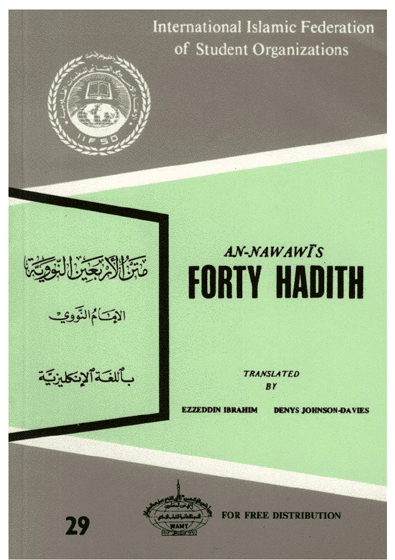
Forty Hadith (Al-Arba’in al-Nawawiyyah): A small yet profound compilation covering the foundational principles of Islamic faith, law, and ethics.
Riyad as-Salihin (The Meadows of the Righteous): A beloved collection of Hadith organized by moral and spiritual themes, found in homes globally.
Al-Minhaj (Sharh Sahih Muslim): One of the definitive classical commentaries on Sahih Muslim, famed for its legal clarity and linguistic precision.
Kitab al-Adhkar: A comprehensive manual of daily supplications and remembrances based on Prophetic traditions.
Methodology & Character
Imam Nawawi’s writings are celebrated for their sincerity (ikhlas), clarity, and practical focus. Beyond his academic work, he was known for his moral courage, frequently writing directly to the Mamluk Sultan Baibars to advocate for justice and relief for the local population.
Legacy & Impact
Imam Nawawi passed away in his hometown of Nawa in 1277 CE. Unmarried and having dedicated his short life entirely to knowledge, his legacy lives on through his timeless books, which remain standard texts in Islamic academies worldwide.