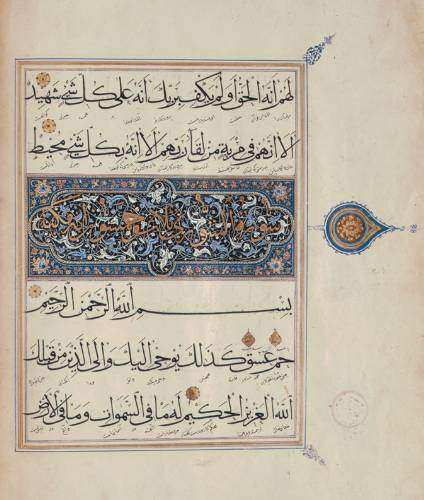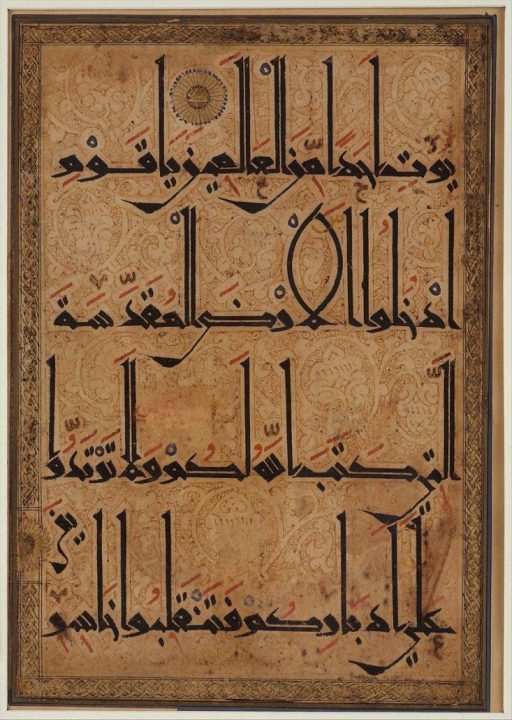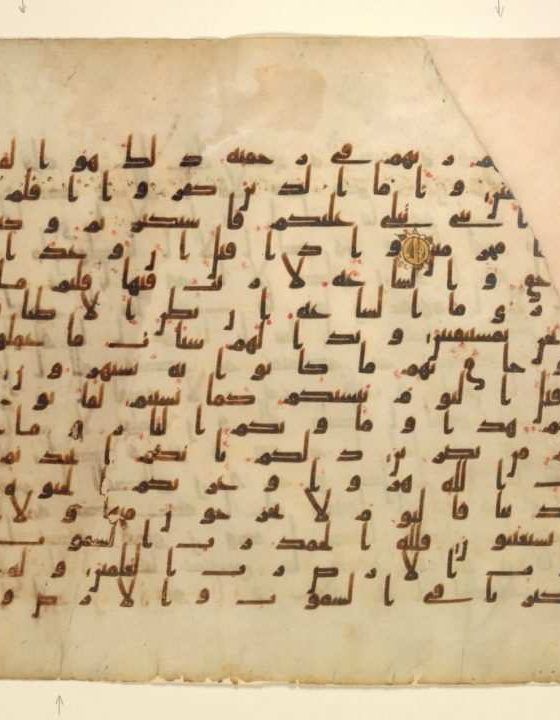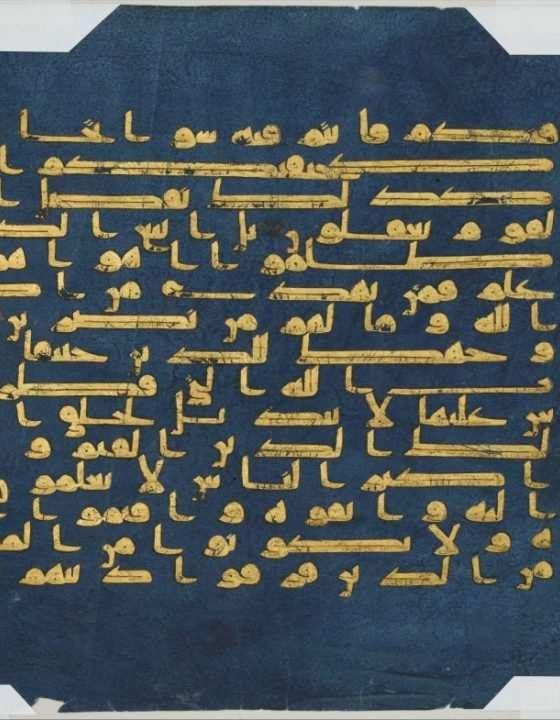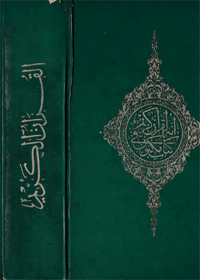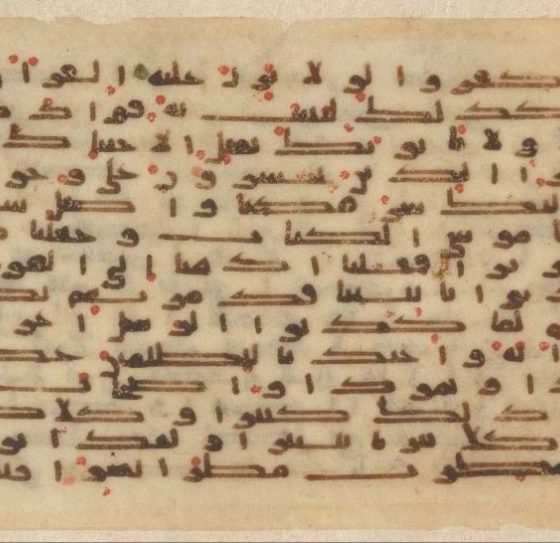
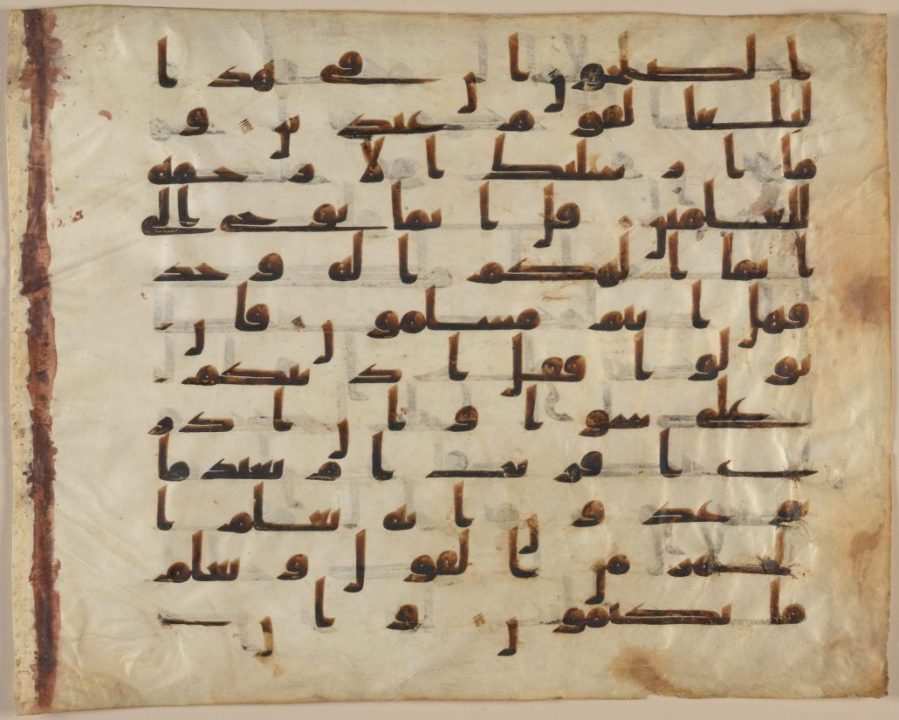
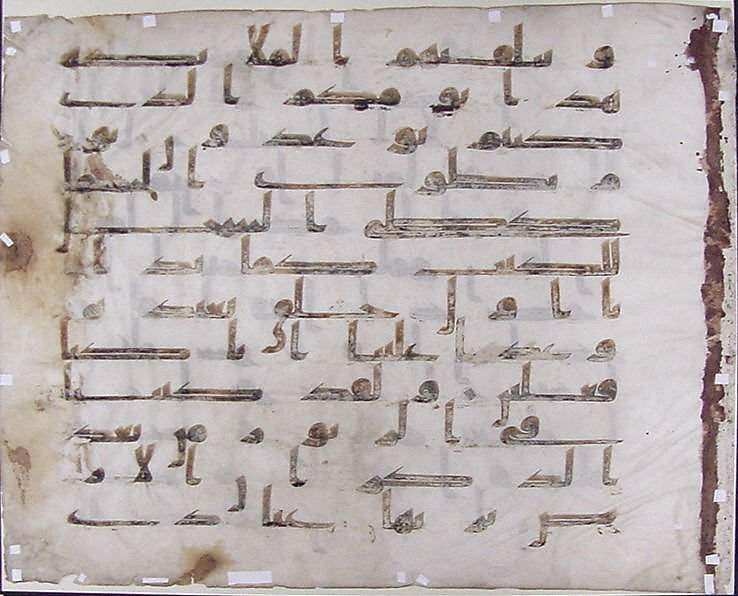
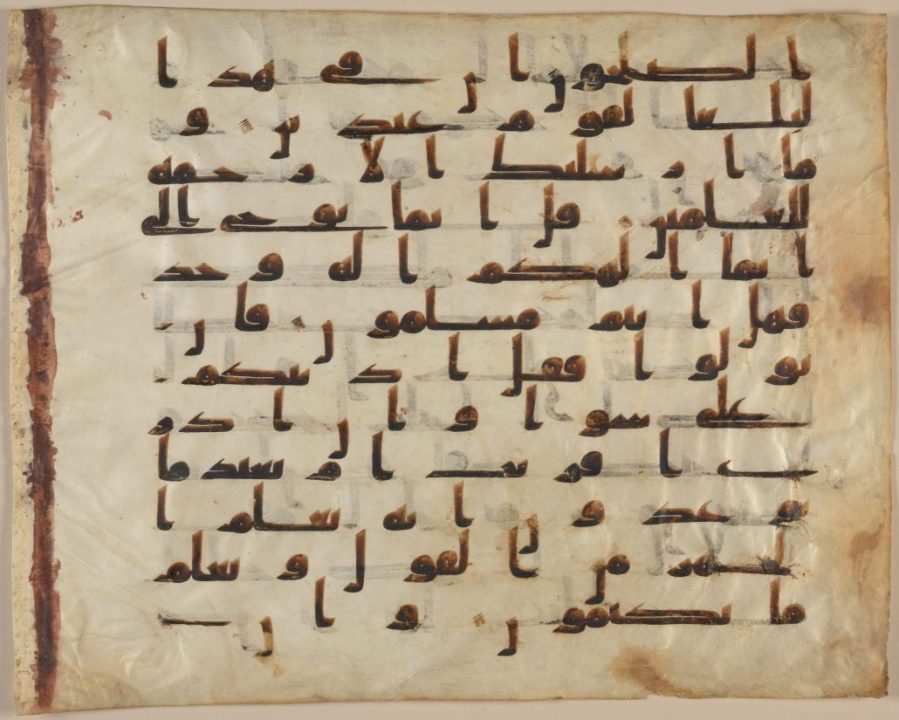
Samarkand Kufic Quran (Uthman Quran)
This folio comes from one of the oldest surviving Qur’an manuscripts in existence.
Year Written: c.765 AD – 855 AD
Language: Arabic
Script Type: Kufic
Current Location: Hast Imam Library, Tashkent, Uzbekistan
For several years, prior to research conducted in the last few decades, the Samarkand Kufic Quran, was thought to be the oldest copies of the Quran in existence. The date the manuscript was written varies widely from between 595 AD – 855 AD. However, most researchers agree that it was most likely written in the 8th or 9th century.
This manuscript is revered by the Muslim community as it is believed to be part of a group of Qurans commissioned by the third caliph Uthman in 651 AD. Uthman wanted to produce a standard copy of the Quran 19 years after the death of the Prophet Muhammad. This belief has been challenged by research that shows the manuscript came long after the 7th century.
Description
Overview
The Samarkand Kufic Quran, also known as the Uthman Quran, stands as one of the most remarkable surviving manuscripts of the Holy Quran, dating back to the period of 765 AD to 855 AD. This exquisite folio is currently housed in the Hast Imam Library in Tashkent, Uzbekistan, and is celebrated for its historical significance and its role in the preservation of Islamic scripture. Respected as a crucial artifact, this manuscript is believed to be part of a collection that was commissioned by the third caliph, Uthman ibn Affan, in 651 AD. Although there has been much scholarly debate regarding its exact date of creation, it is widely accepted that it was produced during the 8th or 9th century, making it a vital piece of Islamic heritage.
Historical Significance
The Samarkand Kufic Quran is often regarded as a symbol of the early Islamic community’s efforts to standardize the Quranic text. Uthman’s initiative to compile a consistent version of the Quran came shortly after the death of the Prophet Muhammad, highlighting the importance of maintaining the integrity of the divine message. Despite the controversies surrounding its origins, this manuscript remains a cherished relic that reflects the artistry of Kufic script and the dedication of early Muslim scholars to preserving their faith’s sacred texts.
- Islamic scholars and researchers interested in Quranic history.
- Students and academics studying the evolution of Arabic script and manuscript preservation.
- Collectors of rare religious texts and artifacts.
- Members of the Muslim community seeking to deepen their understanding of Quranic heritage.
- Individuals interested in the historical context of the early Islamic period.