Folio from the Blue Quran
Folio from the “Blue Quran”
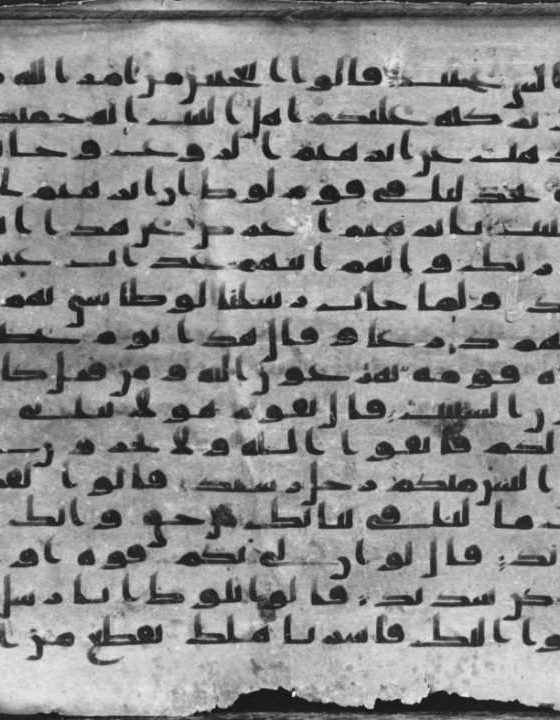
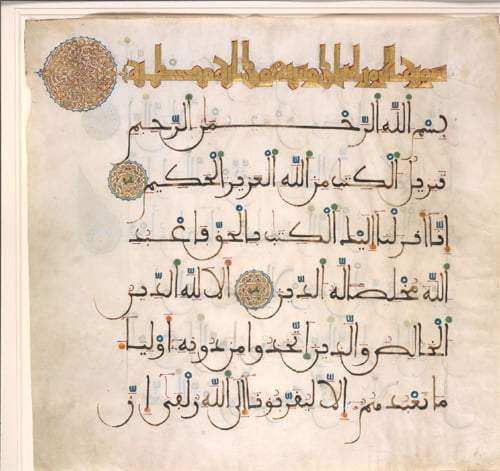
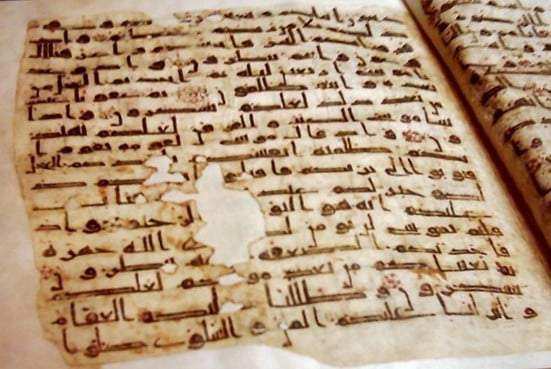
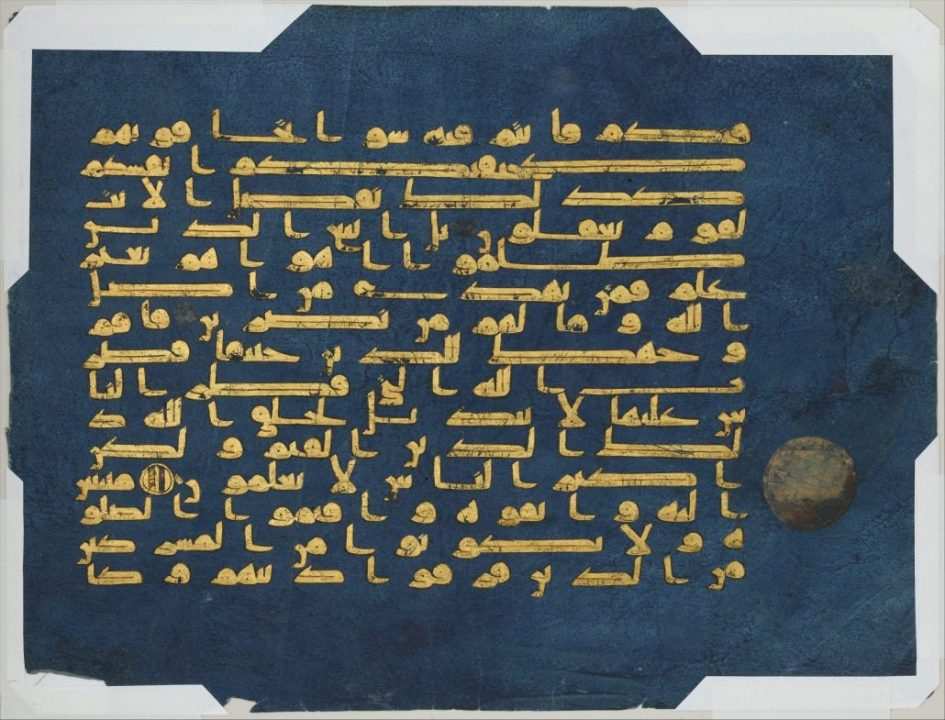
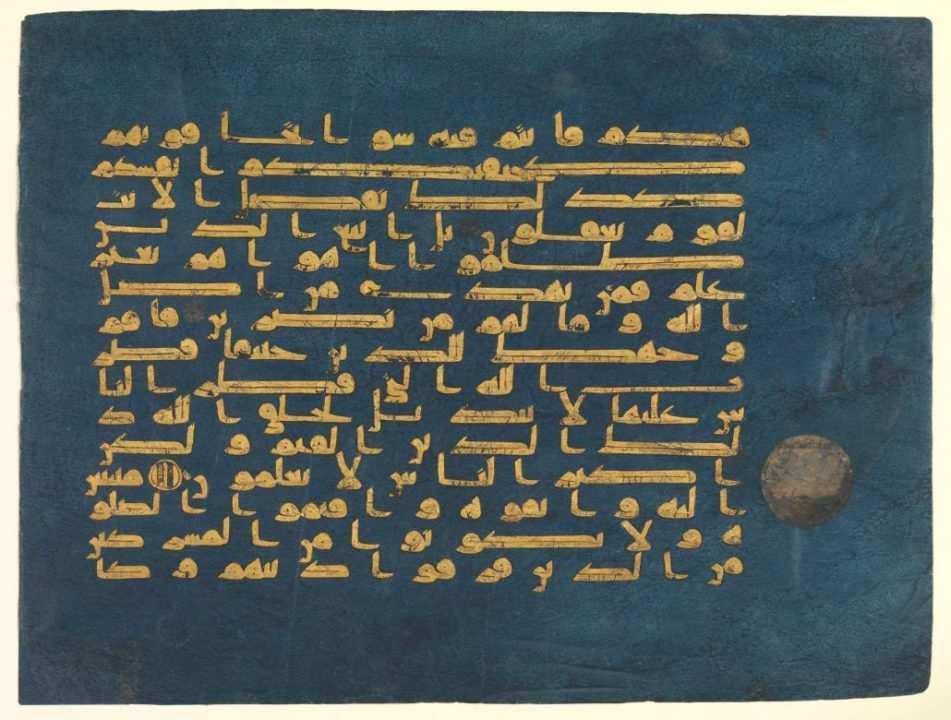
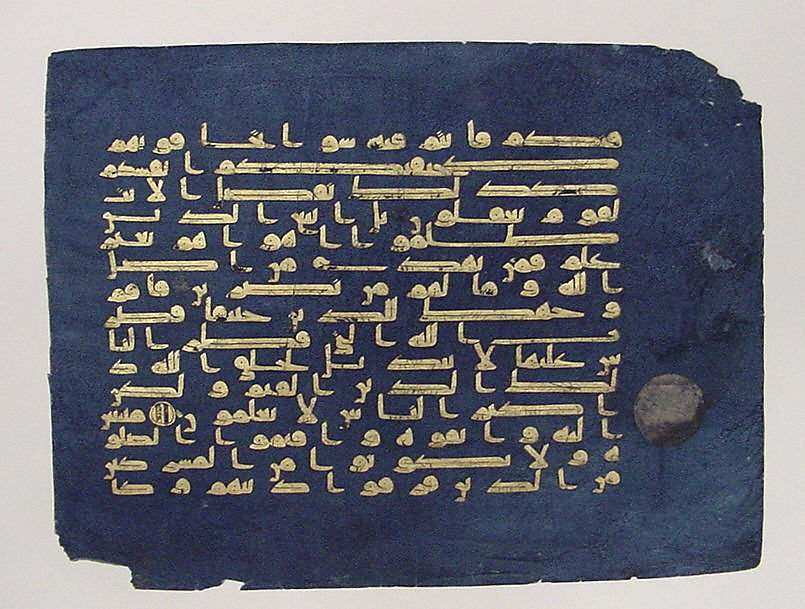
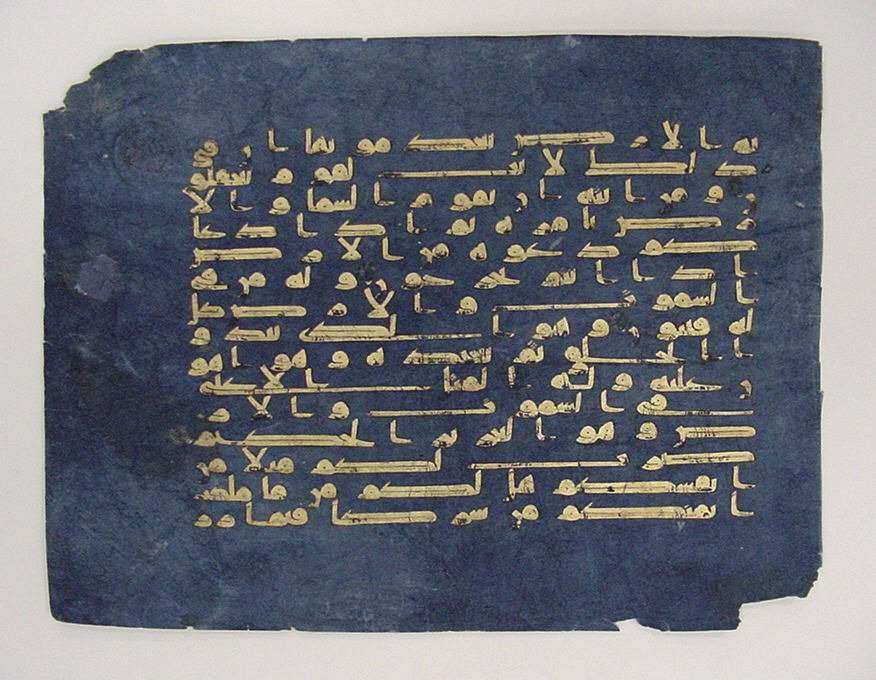
This folio comes from a sumptuous, multivolume Qur’an with indigo pages and silver verse markers that was probably copied in North Africa. Its palette is thought to refer to the purple‑dyed, gilded manuscripts made in the neighboring Byzantine empire. As in other early Qur’ans, the script here is difficult to read because the letters have been manipulated to make each line the same length, and the marks necessary to distinguish between letters have been omitted.
Year Written: c. late 9th century to early 10th century
Language: Arabic
Script Type: Kufic
Current Location: Most of it is located in the National Institute of Art and Archaeology Bardo National Museum in Tunis, Tunisia; 67 folios in the Musée de la Civilisation et des Arts Islamiques in Raqqada, Tunisia; 1 folio at the Los Angeles County Museum of Art in California, USA; and the other folios are scattered worldwide at various museums
The Blue Quran is one of the most famous and beautiful ancient Qurans in the world. The manuscript has been dated to between the late 9th century to the early 10th century; it has been dated as late as 1020 AD. It is believed that the Blue Quran was created for the Great Mosque of Qairawan in Tunisia.
The pages are written with gold ink on vellum colored with indigo, giving it a distinct blue color. Writing the Quran in gold on the blue vellum was most likely influenced by the elaborate official documents written by the Christian Byzantine Empire.
While much of the Blue Quran is preserved by different institutions, in 2012 and 2013 folios were sold at auction, with one folio reportedly selling for over $800,000.
Description
Overview
The Folio from the Blue Quran represents a remarkable piece of Islamic heritage, showcasing the artistry and devotion of its time. Originating from a multivolume Qur’an, this exquisite folio features indigo-dyed pages adorned with intricate silver verse markers, believed to have been produced in North Africa during the late 9th to early 10th century. The manuscript’s vibrant blue palette is thought to draw inspiration from the luxurious manuscripts created in the Byzantine Empire, reflecting a fascinating cultural exchange. The Kufic script, while beautiful, presents a unique challenge for readers, as the manipulation of letters ensures uniform line lengths and omits essential diacritical marks, inviting a closer examination of its artistry and craftsmanship.
Historical Significance
Renowned as one of the most beautiful Qur’ans ever created, the Blue Quran is believed to have been commissioned for the Great Mosque of Qairawan in Tunisia. The striking combination of gold ink on indigo vellum not only highlights the manuscript’s visual appeal but also echoes the grandeur of official documents from the Byzantine Empire. Despite the dispersal of its folios across various prestigious institutions worldwide, the Blue Quran continues to captivate scholars and art enthusiasts alike. Recent auctions have further underscored its value, with individual folios fetching impressive sums, thereby solidifying its status as a treasured artifact of Islamic art and culture.
- Art historians and scholars studying Islamic manuscript traditions.
- Collectors of rare and significant historical artifacts.
- Students of Islamic art and culture seeking inspiration from historical works.
- Individuals interested in the cross-cultural influences between Islamic and Byzantine art.
- Anyone seeking to deepen their understanding of the rich heritage of the Qur’an.