Al Quran Sana’a Manuscript
Al Quran Sana’a Manuscript
Year Written: c.671 AD
Language: Arabic
Script Type: Hijazi
Current Location: Great Mosque of Sana’a, Yemen
References: Madain Project, Wikimedia Commons, Islamic Awareness
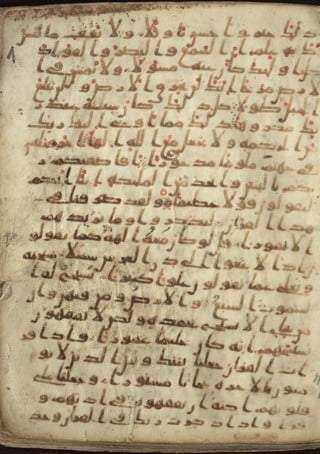
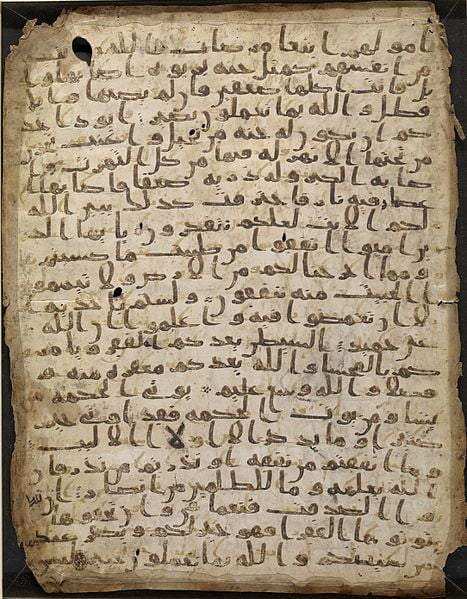
Until recently, the Sana’a manuscript was believed to be the oldest pieces of the Quran in existence. The manuscript was first discovered in 1972 during renovations of the Great Mosque of Sana’a in Yemen. Construction workers uncovered a large cache of Quranic and non-Quranic manuscripts and parchments that were poorly preserved and heavily damaged.
The manuscript was identified as part of the Quran in 1981 and since then, the Yemeni Department for Antiquities – with help from foreign universities – has worked to restore the fragments. It has been radiocarbon dated to between 632 AD – 671 AD, with the lower codex dated with 99% accuracy to 671 AD.
Description
Overview
The Al Quran Sana’a Manuscript is a remarkable historical artifact, believed to date back to approximately 671 AD. This ancient manuscript is written in Arabic using the Hijazi script and is currently housed in the Great Mosque of Sana’a, Yemen. Discovered during renovations in 1972, it was part of a significant cache of Quranic and non-Quranic texts that had been poorly preserved. The manuscript was officially recognized as part of the Quran in 1981, following extensive restoration efforts led by the Yemeni Department for Antiquities, in collaboration with international universities.
Radiocarbon dating has placed the origins of this manuscript between 632 AD and 671 AD, with a 99% accuracy confirming its lower codex date to 671 AD. This places the Sana’a Manuscript among the earliest known fragments of the Quran, providing invaluable insights into the early transmission and preservation of Islamic texts. The script’s Hijazi style reflects the formative years of Islamic calligraphy, making it a crucial piece for scholars and enthusiasts alike.
Key Themes
- Historical Significance: One of the oldest known Quranic manuscripts.
- Textual Preservation: Offers insights into the early stages of Quranic text transmission.
- Cultural Heritage: A vital artifact for understanding Islamic history and heritage.
- Academic Interest: A subject of study for scholars in Islamic studies and manuscript preservation.
Who This Book Benefits
- Students and scholars of Islamic studies.
- Researchers interested in historical manuscripts and preservation techniques.
- Individuals seeking a deeper understanding of early Islamic texts.
- Collectors of religious artifacts and manuscripts.
- Anyone interested in the history of the Quran and its transmission.