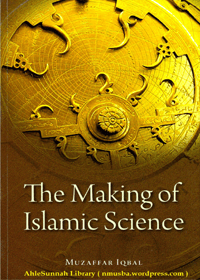
The Making Of Islamic Science English Muzaffar Iqbal
The Making of Islamic Science by Muzaffar Iqbal offers an in-depth examination of the intricate relationship between Islam and the scientific tradition it fostered from the 8th century onward. The book critiques the Western “conflict model” for analyzing this relationship, arguing that Islamic science was organically integrated with its Qur’anic worldview based on the principle of Tawhid (Oneness of God). It traces this tradition through three phases: its rise and zenith, its decline before the Scientific Revolution, and the subsequent encounter with modern Western science during the colonial and post-colonial eras. Iqbal explores key questions about what made the scientific endeavor “Islamic” and how it related to the physical cosmos and God’s creation, ultimately providing a framework for understanding contemporary Muslim attitudes towards modern science.
(Downloads - 27)
Additional information
| Book Writer | |
|---|---|
| Language | |
| File Size | 12 MB |
Description
Overview
“The Making of Islamic Science” by Muzaffar Iqbal is a profound exploration of the dynamic interplay between Islamic thought and the scientific tradition that emerged from it, beginning in the 8th century. Iqbal challenges the prevalent Western “conflict model” which suggests a dichotomy between science and religion, positing instead that Islamic science is deeply rooted in the Qur’anic worldview and the principle of Tawhid, or the Oneness of God. The book meticulously traces the evolution of Islamic science through three pivotal phases: its remarkable rise and peak, the subsequent decline preceding the Scientific Revolution, and the complex interactions with modern Western science during the colonial and post-colonial periods.
Key Themes
Throughout the text, Iqbal delves into critical inquiries regarding the essence of what constitutes “Islamic” science, exploring its intrinsic connections to the physical universe and the divine creation as articulated in Islamic teachings. By providing a nuanced understanding of how historical contexts shaped scientific endeavors in the Islamic world, the author offers valuable insights into the contemporary Muslim perspectives on modern scientific practice and knowledge. This book serves as a vital resource for those seeking to comprehend the historical and philosophical underpinnings of science within an Islamic framework.
- Students and scholars of Islamic studies seeking a deeper understanding of the intersection of science and religion.
- Historians interested in the development of scientific thought in the Islamic Golden Age.
- Educators looking for comprehensive resources to teach about Islamic contributions to science.
- General readers curious about the relationship between faith and scientific inquiry in the Islamic tradition.
- Researchers examining contemporary Muslim attitudes toward modern science and technology.