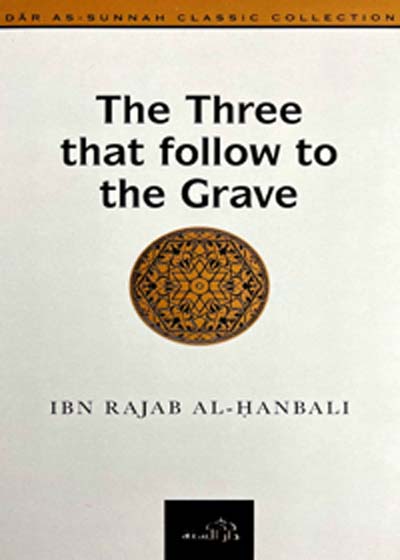
The Three That Follow To The Grave English Ibn Rajab al-Hanbali
“The Three That Follow To The Grave” is a concise and profoundly reflective treatise by the celebrated Hadith master, Ibn Rajab al-Hanbali (d. 795 AH), derived from his commentary on the Prophet’s saying: “Three things follow the deceased person (to the grave): his family, his wealth, and his actions. Two of them return, and one remains.” This book offers a piercing spiritual lesson on mortality and eternal reward, systematically dissecting why only a person’s deeds—whether righteous or otherwise—truly accompany them beyond their final resting place, urging the reader to prioritize the enduring currency of the Hereafter over the fleeting attachments of family and wealth.
Additional information
| Book Writer | |
|---|---|
| Language | |
| File Size | 4 MB |
Description
Overview
“The Three That Follow To The Grave” is a concise and profoundly reflective treatise by the celebrated Hadith master, Ibn Rajab al-Hanbali (d. 795 AH), derived from his commentary on the Prophet’s saying: “Three things follow the deceased person (to the grave): his family, his wealth, and his actions. Two of them return, and one remains.” This book offers a piercing spiritual lesson on mortality and eternal reward, systematically dissecting why only a person’s deeds—whether righteous or otherwise—truly accompany them beyond their final resting place, urging the reader to prioritize the enduring currency of the Hereafter over the fleeting attachments of family and wealth.
Key Themes
Ibn Rajab al-Hanbali’s work provides an essential exploration of the concepts of life, death, and what follows thereafter. Through his eloquent prose, he encourages readers to reflect deeply on their lives and the legacy they will leave behind. The treatise emphasizes the transient nature of worldly attachments and the permanence of one’s actions, highlighting the following key themes:
- The significance of righteous deeds as the only companions in the afterlife.
- The temporary nature of family and wealth in the face of mortality.
- The importance of self-reflection and accountability in one’s actions.
- Encouragement to cultivate a life that prioritizes spiritual growth and ethical living.
Who This Book Benefits
- Muslims seeking to deepen their understanding of life and the afterlife.
- Students and scholars of Islamic theology and Hadith.
- Individuals in search of spiritual guidance and motivation for personal development.
- Anyone reflecting on the meaning of life and the legacy they wish to leave.