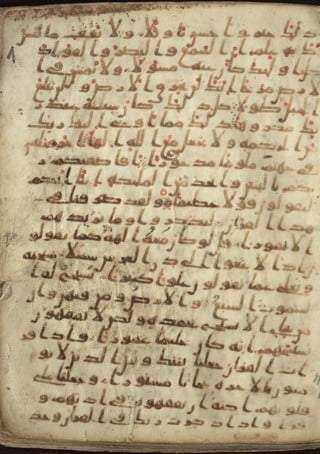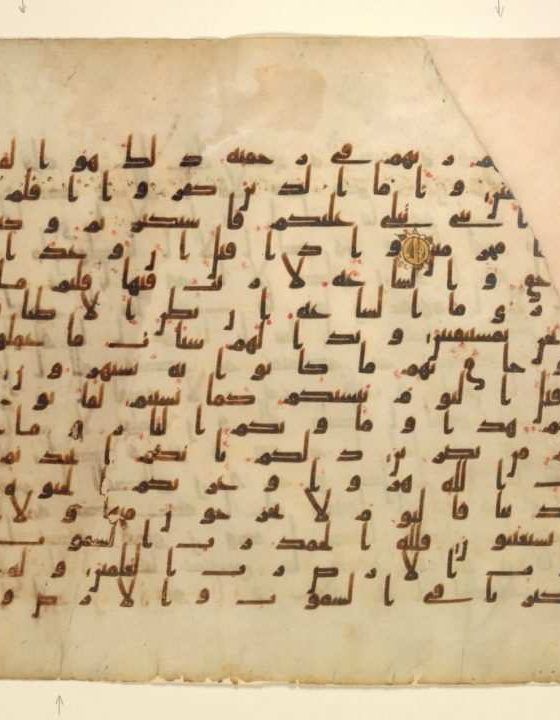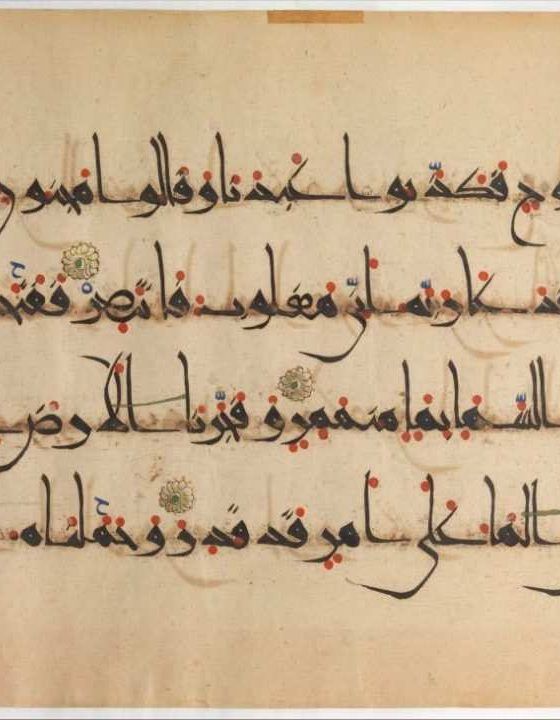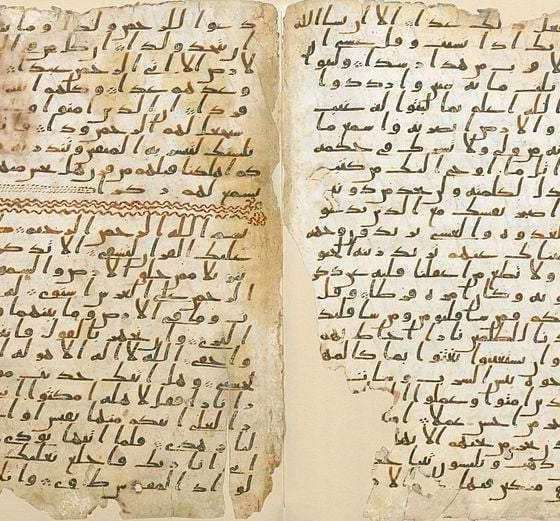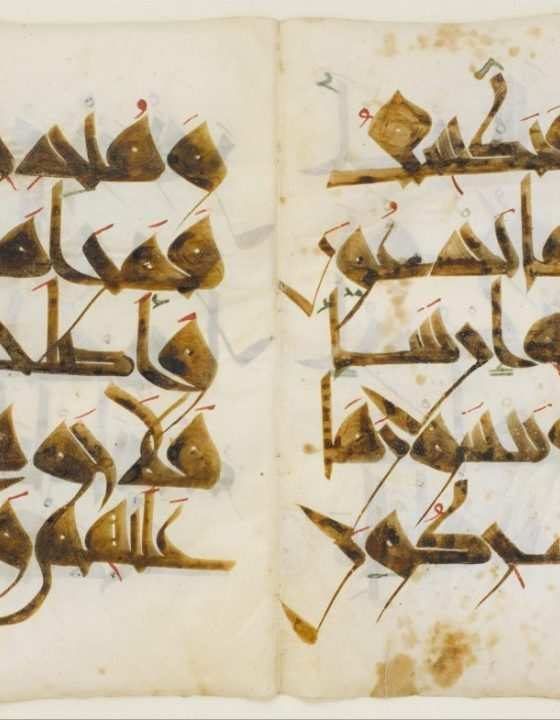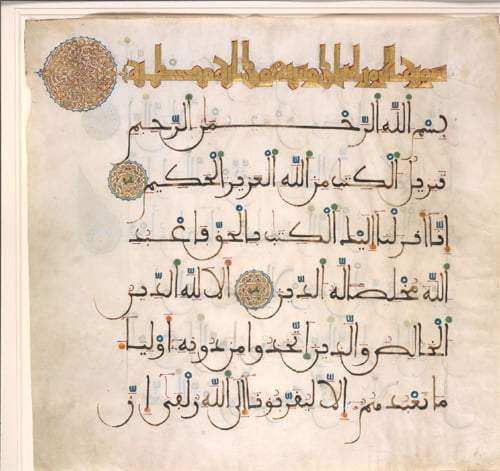
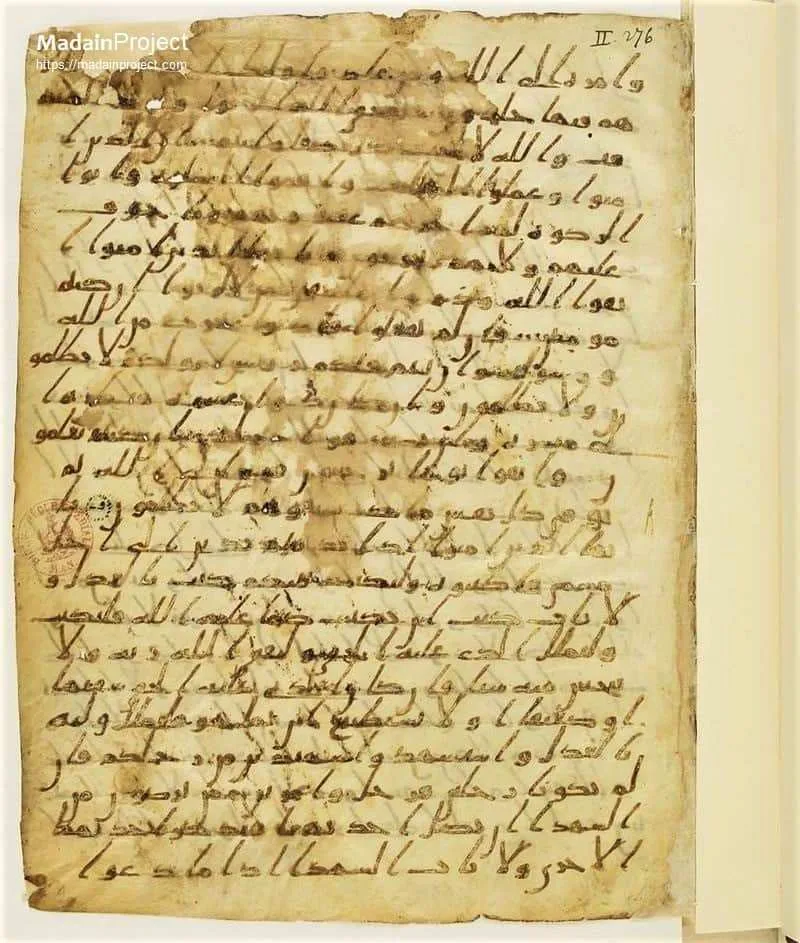
Al Quran Codex Parisino-Petropolitanus
Codex Parisino-possibly the oldest extant Quranic manuscript
Year Written: c. late 7th to early 8th century
Language: Arabic
Script Type: Hijazi
Current Location: 70 folios at Bibliothèque nationale de France, Paris; 26 folios at the National Library of Russia in Saint-Petersburg, Russia; 1 folio in the Vatican Library; and 1 folio in Khalili Collection in London
References: Madain Project, Wikimedia Commons
The Codex Parisino-Petropolitanus is a 98 folio Quran manuscript dating back to the late 7th or early 8th century. The manuscript was found with several Quranic fragments in the Amr Mosque in Fustat, Egypt. During the Napoleonic expedition in the late 18th century, French scholar Jean-Joseph Marcel bought several of the folios and Jean-Louis Asselin de Cherville bought a few more pages a few years later.
Research conducted by Yassin Dutton suggests that the manuscript may have been written in Syria as it is written in the qira’at (readings/recitations) of Ibn Amir of Damascus, Syria. Today, parts of the manuscript are preserved across four different institutions: the Bibliothèque nationale de France, the National Library of Russia, the Vatican Library, and the Khalili Collection in London.
Description
Overview
The Al Quran Codex Parisino-Petropolitanus stands as a remarkable testament to the early transmission of the Quran, believed to date from the late 7th to early 8th century. This ancient manuscript, significant for its historical and religious value, is one of the oldest extant Quranic texts known to scholars and historians alike. Originating from the Amr Mosque in Fustat, Egypt, this codex has traversed centuries, with its folios now housed in prestigious institutions across Europe, including the Bibliothèque nationale de France in Paris, the National Library of Russia in Saint-Petersburg, the Vatican Library, and the Khalili Collection in London. The manuscript is inscribed in the Hijazi script, reflecting the early Islamic calligraphic styles that were prevalent in the region during its creation.
Historical Significance
Research suggests that the Codex Parisino-Petropolitanus may have connections to Syria, specifically linked to the qira’at (readings/recitations) of Ibn Amir of Damascus. This connection enriches our understanding of the regional variations in Quranic recitation and emphasizes the manuscript’s role in the early development of Islamic textual traditions. The provenance of the manuscript is equally fascinating; during the late 18th century, French scholar Jean-Joseph Marcel acquired several folios, and Jean-Louis Asselin de Cherville followed suit shortly thereafter, ensuring that this invaluable piece of Islamic heritage would be preserved for future generations. Each folio serves not only as a religious document but also as a historical artifact that offers insights into the early Islamic community and its practices.
- Scholars and researchers studying early Islamic history and Quranic texts.
- Students of Islamic studies seeking to understand the evolution of Quranic manuscripts.
- Historians interested in the cultural and religious exchanges during the early Islamic period.
- Collectors and enthusiasts of ancient manuscripts and Islamic art.
- General readers looking to deepen their knowledge of the Quran and its historical context.