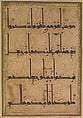
Folio from a Quran Manuscript ca. 1180
Folio from a Qur’an Manuscript ca. 1180
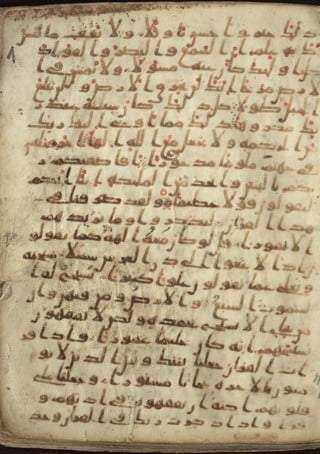
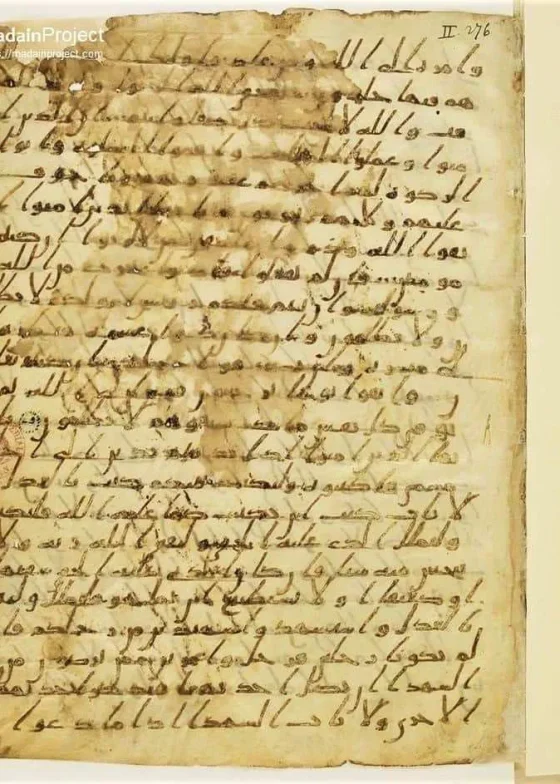
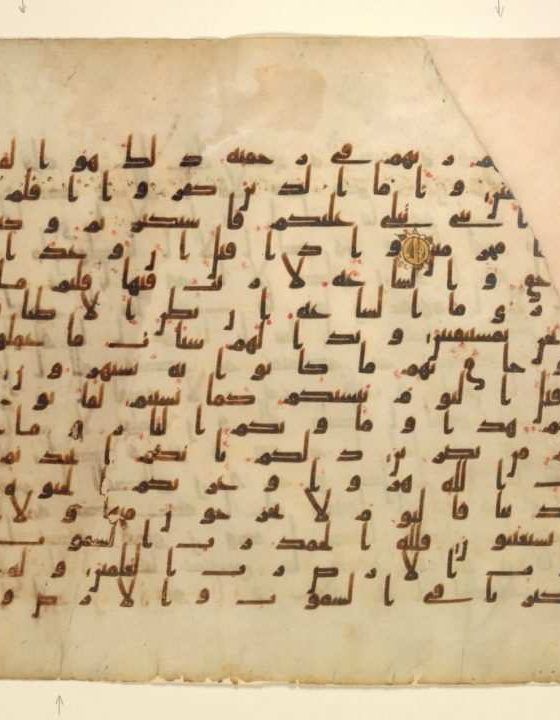
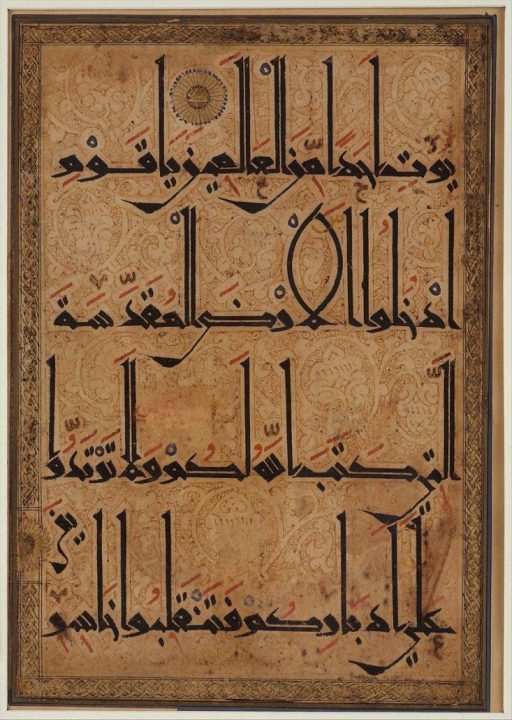
Written in Eastern or new style kufic script , line two of this folio includes two long, vertical letters (alif and lam), forming a distinctive pointed oval-shaped pattern. The elaborate treatment of the background, entirely filled with vegetal scrolls terminating in large blossoms so that the script seems to stand out against the decorative background. The script and illumination are related to a Qur’an in the Topkapi Saray Museum, dated 573/1177–78, epigraphic inscriptions on architecture and luster ceramics of this period, suggesting a unity of style in Seljuk art of eleventh and twelfth century Iran and Iraq.
Description
Overview
This exquisite folio from a Qur’an manuscript, dating back to approximately 1180, is a remarkable example of the artistic and calligraphic mastery of its time. Crafted in Eastern or new style kufic script, this piece features a striking design where the second line showcases two elongated letters, alif and lam, creating a unique pointed oval-shaped pattern. The intricate background is adorned with elaborate vegetal scrolls that culminate in large blossoms, enhancing the visual impact of the script, which stands out beautifully against the rich decorative backdrop. This folio represents a significant period in Islamic art, reflecting the unity of style prevalent in the Seljuk art of the eleventh and twelfth centuries across Iran and Iraq.
Artistic Significance
The script and illumination of this folio share a stylistic connection with a Qur’an housed in the Topkapi Saray Museum, dated 573/1177–78. The epigraphic inscriptions found in the architecture and luster ceramics from this era further underscore the cohesive aesthetic that characterizes Seljuk artistic expression. This folio not only serves as a testament to the skill of its creators but also as a bridge connecting the cultural and historical narratives of the Islamic world during a flourishing period of creativity and innovation.
- Art historians and students seeking to understand the evolution of Islamic calligraphy.
- Collectors of rare manuscripts and enthusiasts of Islamic art.
- Individuals interested in the cultural heritage and artistic achievements of the Seljuk period.
- Researchers exploring the interconnections between different forms of Islamic art and architecture.