Folios from a Qur’an Manuscript A.H. 383/A.D. 993
Folios from a Qur’an Manuscript A.H. 383/A.D. 993
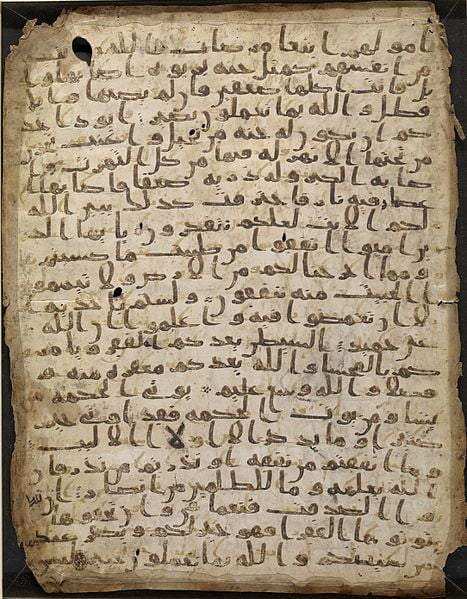
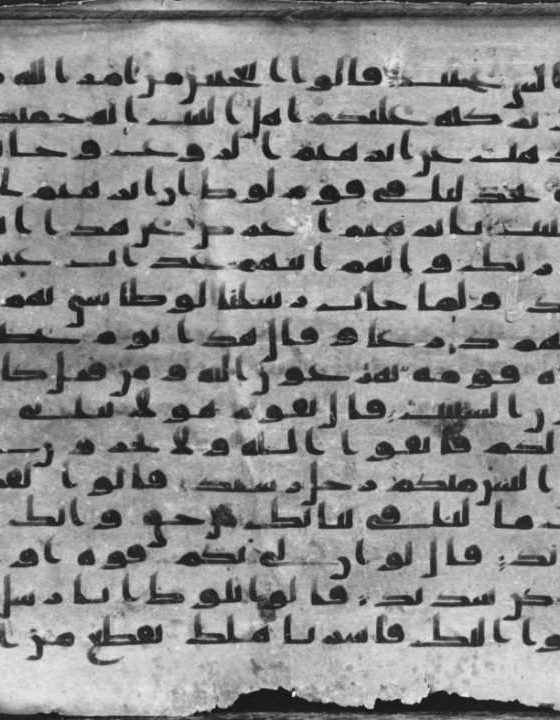
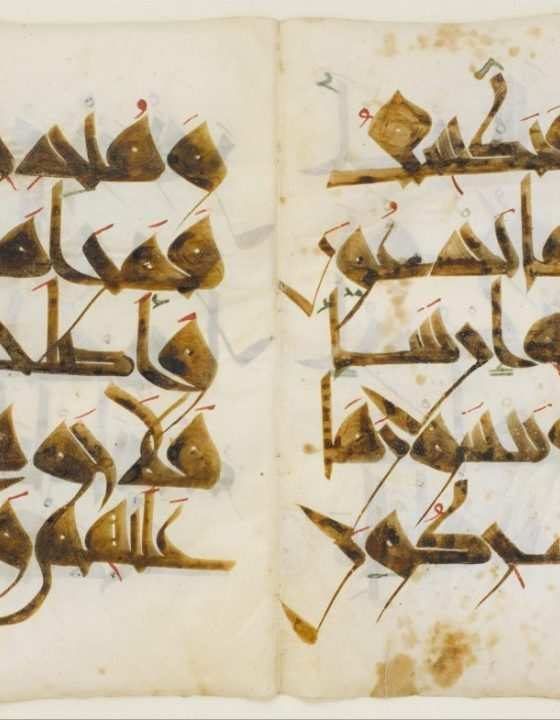
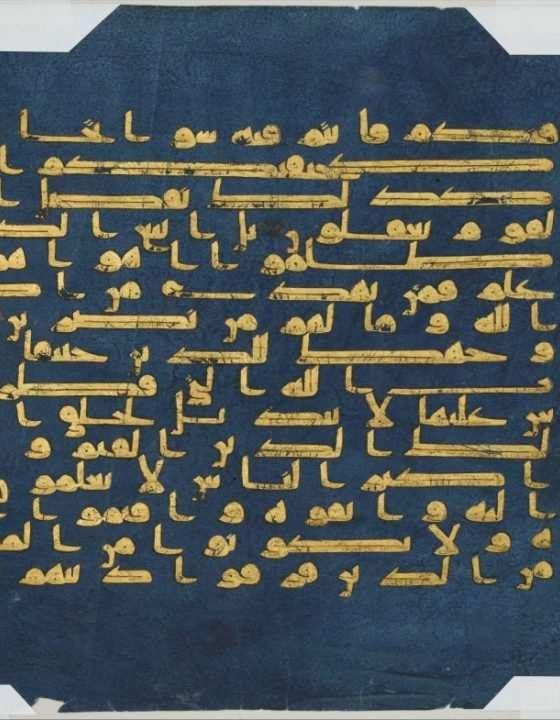
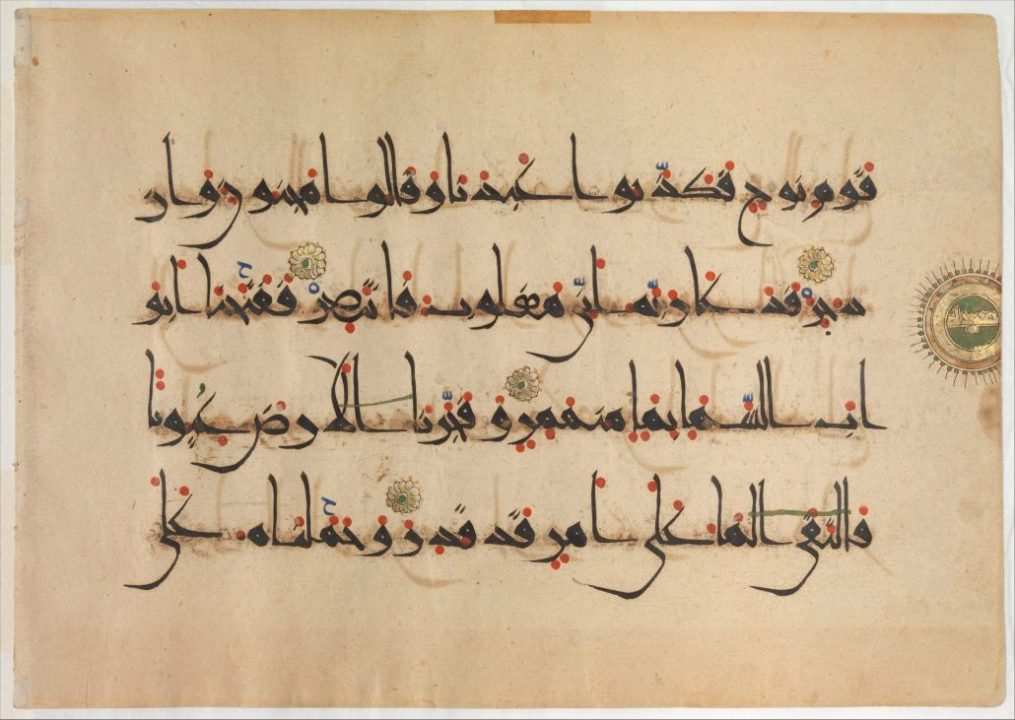
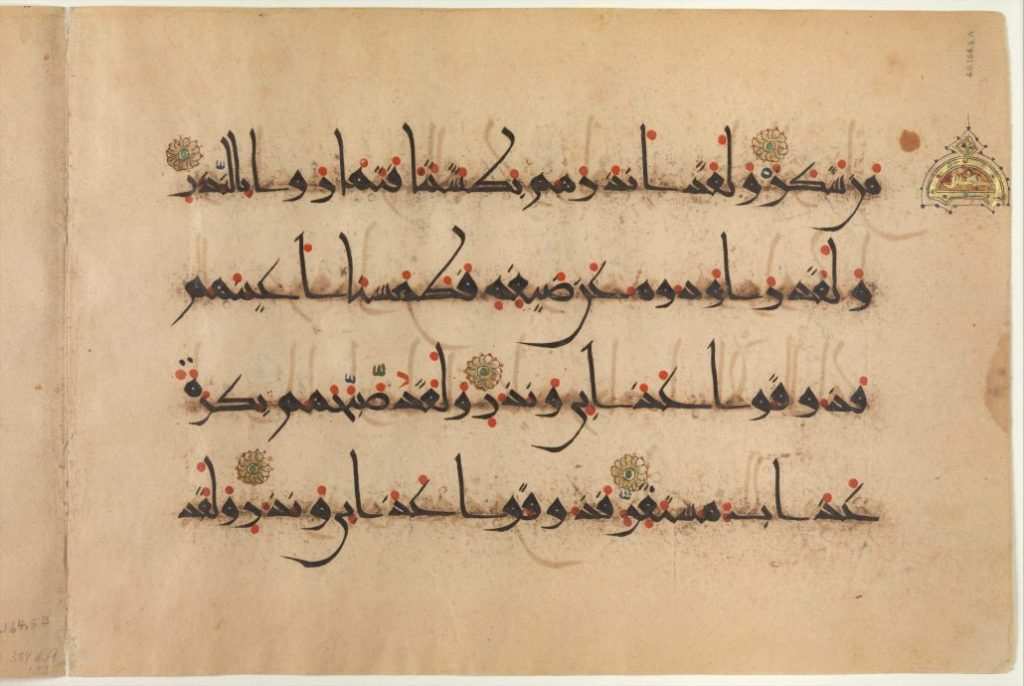
The first centuries in the copying of the Qur’an witnessed a succession of changing styles in the manuscript’s calligraphy, decoration, and format. This Qur’an shows many of the changes taking place in the medieval period. Whereas earlier Qur’ans were made of parchment and inscribed in a relatively simple kufic script, this manuscript was created of paper and of an angular script known as “new style script”. The folios belong to the last volume of a four-part Qur’an manuscript, other folios of which provide the date of AH Ramadan 383 / AD October – November 993 and indicate that it was copied in the Iranian city of Isfahan. In both its medium and calligraphy, these folios reveal the increasing cultural pull of the eastern edge of the Islamic world, a decided shift from the earlier, Mediterranean- focus of the first Islamic centuries.
Description
Overview
The “Folios from a Qur’an Manuscript A.H. 383/A.D. 993” is a remarkable artifact that embodies the evolution of Qur’anic manuscript production during a pivotal period in Islamic history. This manuscript is a testament to the artistic and cultural advancements of the time, showcasing the transition from traditional parchment to paper, and the evolution of calligraphic styles. The use of the “new style script” reflects a significant shift in the aesthetic preferences of the Muslim community, representing both a geographical and cultural expansion towards the eastern regions of the Islamic world, particularly Isfahan, Iran. The folios encapsulate the historical context of their creation, dated to Ramadan 383 AH, which corresponds to October – November 993 AD, marking a significant era in Qur’anic scholarship and artistry.
Key Themes
These folios are not just religious texts; they are cultural treasures that provide insights into the historical, artistic, and intellectual developments of the Islamic civilization. The intricate calligraphy and decorative elements signify the craftsmanship of the period, while the transition to paper indicates broader changes in material culture and accessibility of the Qur’an. This manuscript serves as a bridge connecting the early Islamic artistic traditions with the burgeoning styles of the medieval period, highlighting the dynamic nature of Islamic art and literature.
- Scholars and researchers interested in Islamic manuscript history and calligraphy.
- Students of religious studies and Islamic art looking to understand the evolution of Qur’anic texts.
- Art enthusiasts and collectors who appreciate historical manuscripts and their cultural significance.
- Individuals seeking to deepen their knowledge of Islamic heritage and its impact on global art and culture.