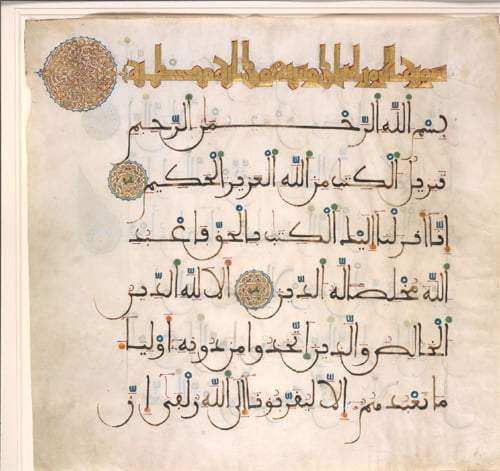
Folio from a Qur’an Manuscript late 13th–early 14th century
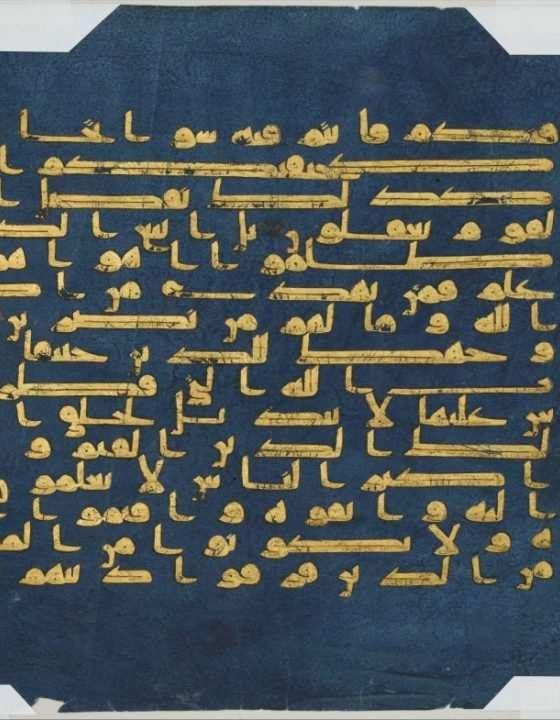
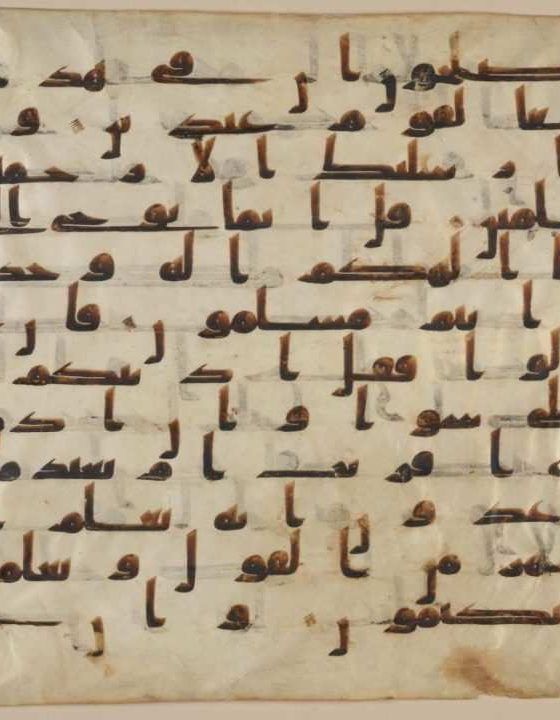
This large folio comes from a magnificent two-volume Qur’an. In Spain, as in North Africa, Qur’an manuscripts and Qur’anic calligraphy retained archaic features long since abandoned farther east. Such features include the use of parchment instead of polished paper, a square format, and deep, rounded letter terminals, as seen in this example.
Description
Overview
This exquisite folio, originating from a magnificent two-volume Qur’an manuscript dating back to the late 13th to early 14th century, is a remarkable testament to the enduring beauty and tradition of Qur’anic calligraphy. Crafted in Spain, this piece exemplifies the unique characteristics that distinguish Iberian manuscripts from their eastern counterparts. The use of parchment rather than polished paper, a square format, and the distinctive deep, rounded letter terminals are notable features that highlight the historical significance and artistic merit of this folio.
Artistic Significance
The artistry of this folio reflects a rich cultural heritage, where the calligraphers employed techniques that were prevalent in the region during that era. The careful attention to detail and the harmonious arrangement of text not only serve a functional purpose but also elevate the manuscript to a work of art. Such manuscripts were not just religious texts; they were also symbols of prestige and scholarly achievement in the Islamic world.
- Islamic scholars and researchers seeking primary sources for study.
- Art historians examining the evolution of calligraphy and manuscript production.
- Collectors and enthusiasts of Islamic art and historical artifacts.
- Individuals interested in the cultural heritage of Spain and North Africa during the medieval period.
- Students of Islamic studies who wish to explore historical manuscripts.