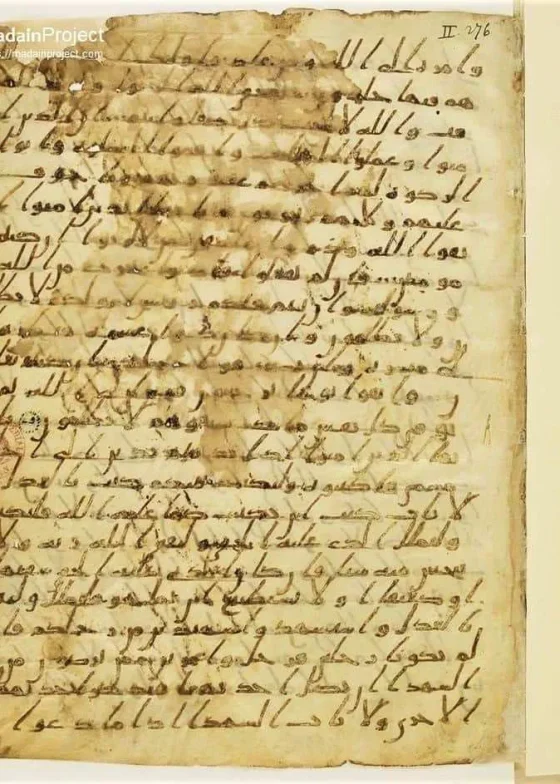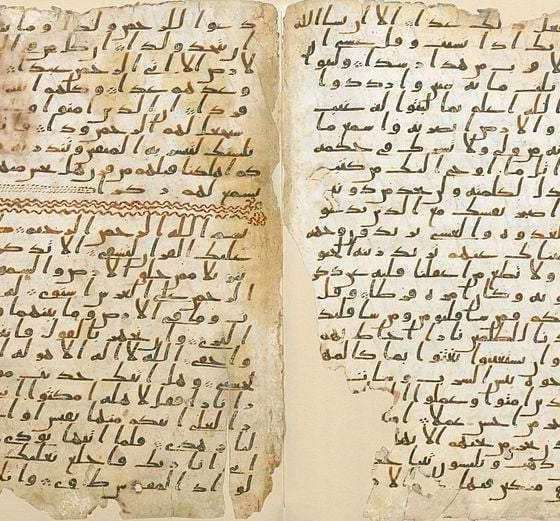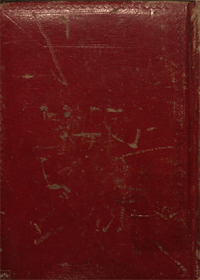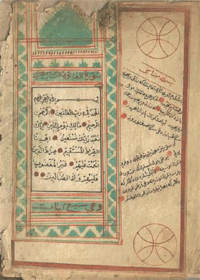
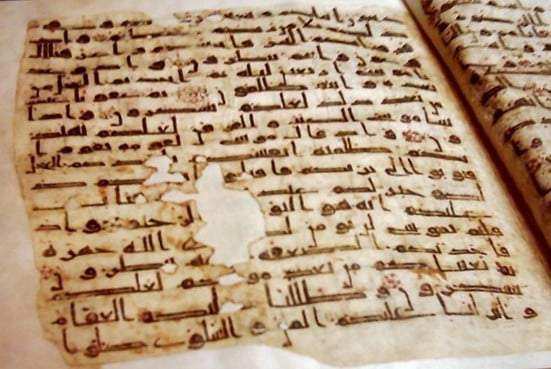
Al Quran Topkapi Manuscript
Year Written: c. early to mid 8th century
Language: Arabic
Script Type: Kufic
Current Location: The Topkapi Palace Museum, Istanbul, Turkey
Image credit: T. Altikulaç, Al-Muṣḥaf Al-Sharif: Attributed To ʿUthmān Bin ʿAffān (The Copy At The Topkapi Palace Museum), 2007, Organization of the Islamic Conference Research Centre for Islamic History, Art and Culture: Istanbul (Turkey).
Like the Smarkand Kufic Quran, the Topkapi manuscript was often cited as the oldest Quran for many years. Recent research, however, shows that the Topkapi manuscript is at least a century younger than the oldest existing Quran fragments.
The Topkapi manuscript has been dated to about the early to mid 8th century and is a nearly complete text of the Quran. In that respect, it is most likely the oldest near-complete Quran in existence.
Also like the Samarkand Quran, the Topkapi manuscript is believed to be an original Quran commissioned by the third caliph Uthman in 651. Research has shown that this is not true and that the manuscript is over a century younger than Uthman’s Qurans.
Description
Overview
The Al Quran Topkapi Manuscript is a remarkable historical artifact, believed to have been composed in the early to mid-8th century. This exquisite manuscript is a near-complete version of the Quran, showcasing the early development of Islamic script and text preservation. Housed in the prestigious Topkapi Palace Museum in Istanbul, Turkey, it serves as a vital link to the early Islamic era, providing insights into the religious and cultural practices of the time. The script used in this manuscript is Kufic, a style known for its angular, geometric forms, which reflects the artistic sensibilities of the period.
Historical Significance
While the Topkapi manuscript was once regarded as one of the oldest Qurans in existence, recent research indicates that it is actually at least a century younger than the earliest known Quranic fragments. Nonetheless, it remains one of the oldest near-complete Qurans available today. It is often associated with the original Qurans commissioned by the third caliph, Uthman ibn Affan, in 651 CE. Although the manuscript’s connection to Uthman has been re-evaluated, it still holds immense value for scholars and religious practitioners alike, offering a glimpse into the transmission and evolution of the Quranic text.
- Scholars studying Islamic history and manuscript preservation.
- Students of religious studies and Islamic theology.
- Collectors and enthusiasts of historical religious texts.
- Individuals seeking to deepen their understanding of early Islamic art and calligraphy.
- Anyone interested in the cultural heritage of the Islamic world.