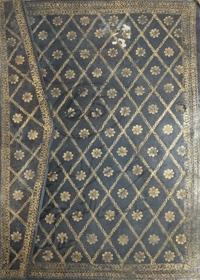

Birmingham Quran Manuscript
Birmingham Quran Manuscript
Year Written: c.568 AD – 645 AD
Language: Arabic
Script Type: Hijazi
Current Location: University of Birmingham, Birmingham, England
References:
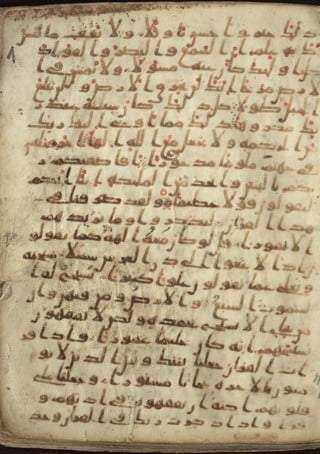
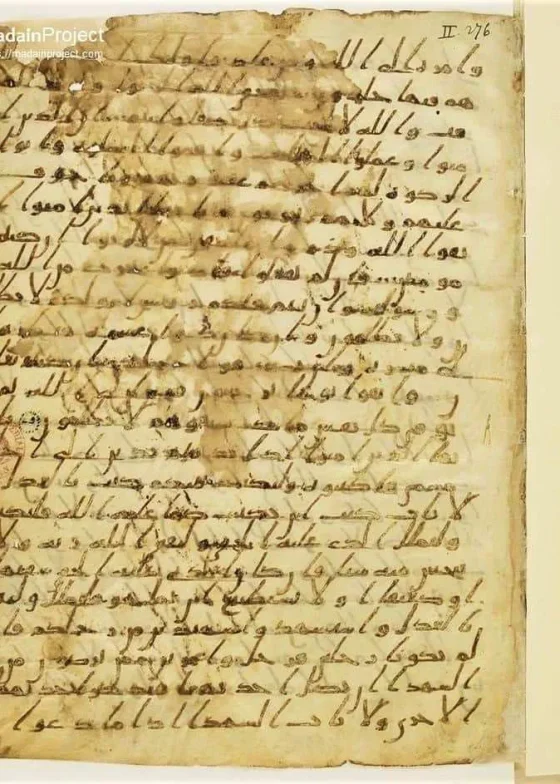
The Birmingham Quran Manuscript is currently believed to be the oldest Quran in the world. This manuscript consists of two leaves of parchment that are a fragment of an early Quranic manuscript dated between 568 AD – 645 AD. Researchers at the University of Birmingham in England dated the parchment to within a 95.4% accuracy.
This means that the manuscript may have been written shortly after the Prophet Muhammad died as he is thought to have lived between 570 AD – 632 AD. The manuscript contains text from suras (chapters) 18 – 20 and is written in Arabic Hijazi script.
(Downloads - 59)
Description
Overview
The Birmingham Quran Manuscript stands as a monumental artifact in the history of Islamic literature, widely regarded as the oldest surviving Quran in existence. This remarkable manuscript, which dates back to a period between 568 AD and 645 AD, is a testament to the early transmission of the Quranic text shortly after the Prophet Muhammad’s lifetime. The manuscript comprises two leaves of parchment, containing significant text from suras (chapters) 18 to 20, meticulously inscribed in the elegant Hijazi script. Researchers at the University of Birmingham have employed advanced dating techniques, confirming the parchment’s age with an impressive 95.4% accuracy.
Significance and Historical Context
The Birmingham Quran Manuscript not only serves as a crucial piece of evidence in the study of early Islamic texts but also provides invaluable insights into the development of Quranic scripture. Its existence highlights the oral and written traditions that were pivotal in preserving the teachings of Islam during its formative years. The potential dating of the manuscript places it within a remarkably close temporal proximity to the life of the Prophet Muhammad, offering scholars an unparalleled glimpse into the early codification of the Quranic revelations.
- Islamic scholars and researchers seeking primary sources for the study of early Quranic texts.
- Students of Islamic history interested in the origins and evolution of the Quran.
- Individuals exploring the intersection of faith and historical documentation.
- Collectors and enthusiasts of rare manuscripts and ancient texts.
- Anyone looking to deepen their understanding of the Hijazi script and its significance in Islamic literature.