Folio from a Quran Manuscript 9th century
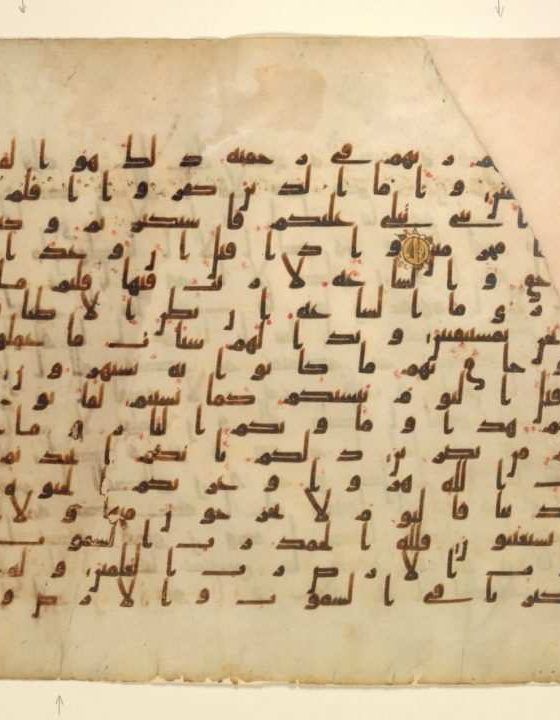
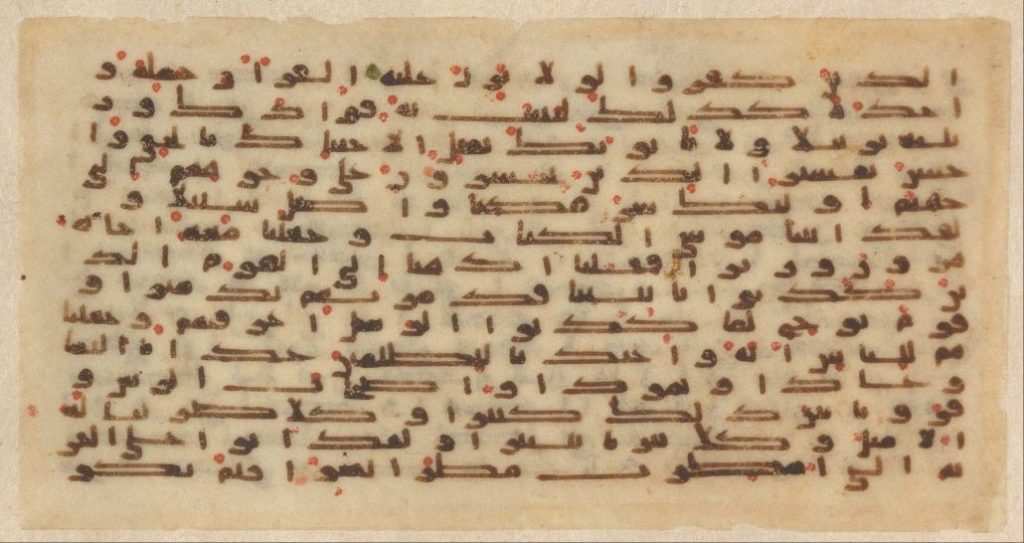
This small-scale Qur’an was used as an intimate personal object, probably worn or carried as an amulet during travel. Despite its diminutive size, it shares many features with other early Qur’ans, which were often much larger and used as memory guides for public recitations. Here, densely packed writing in kufic script is lengthened horizontally, and red dots mark short vowels.
Description
Overview
This exquisite folio from a 9th-century Quran manuscript represents a significant artifact of Islamic history, showcasing the artistry and reverence associated with the holy text. Small in scale, this Qur’an likely served as a personal object, cherished and carried by individuals as a means of spiritual connection during their travels. Its compact size does not diminish its importance; instead, it reflects the intimate relationship early Muslims had with their sacred scripture. The manuscript’s kufic script is meticulously rendered, with horizontal elongation that enhances its visual appeal. The use of red dots to indicate short vowels showcases the early efforts in Quranic orthography, making it a valuable resource for understanding the evolution of Quranic writing.
Key Themes
This folio embodies several key themes central to the appreciation of early Islamic manuscripts:
- Personal Devotion: The small size suggests it was used for personal reflection and devotion, highlighting the intimate relationship between the reader and the text.
- Artistic Excellence: The kufic script, known for its geometric and angular shapes, reflects the high level of artistry and craftsmanship prevalent in early Islamic calligraphy.
- Cultural Significance: As a travel companion, this manuscript illustrates the mobility of Islamic culture and the dissemination of religious texts across regions.
- Historical Insight: The features of this manuscript provide valuable insights into the practices of Quranic preservation and recitation in the early Islamic period.
This remarkable folio serves as a testament to the spiritual and cultural heritage of Islam, making it a valuable addition to any collection or study of Islamic art and history.
- Students of Islamic art and history seeking to deepen their understanding of early Quranic manuscripts.
- Researchers interested in the evolution of Arabic calligraphy and orthographic practices.
- Collectors of rare manuscripts and artifacts who appreciate historical significance and craftsmanship.
- Individuals looking to enhance their personal library with items that reflect faith and devotion.