Folio from a Quran Manuscript late 8th–early 9th century
Folio from a Qur’an Manuscript late 8th–early 9th century
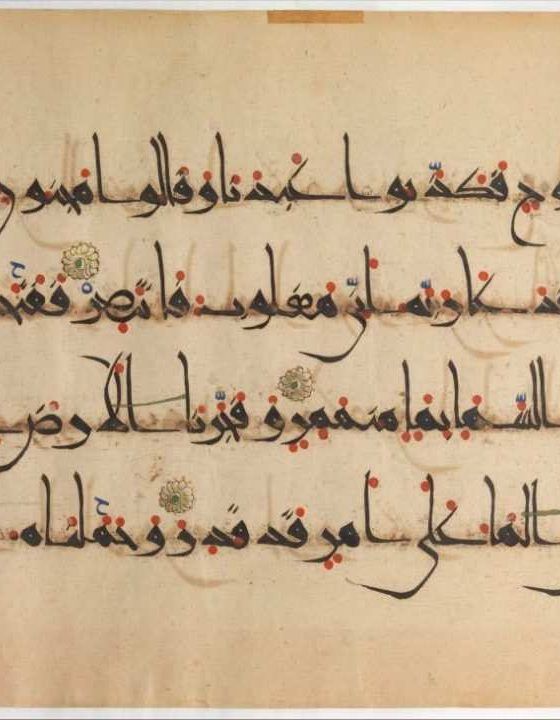
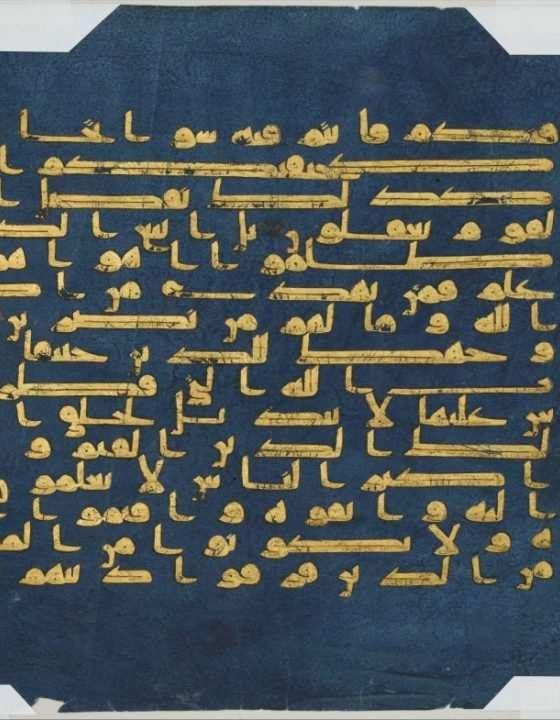
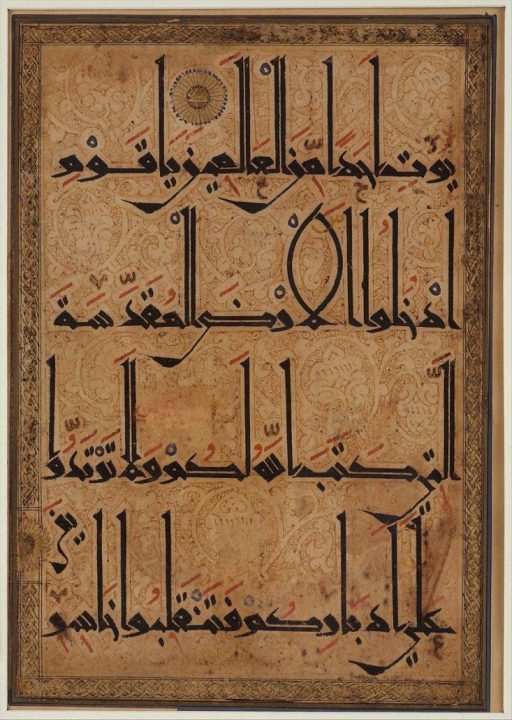
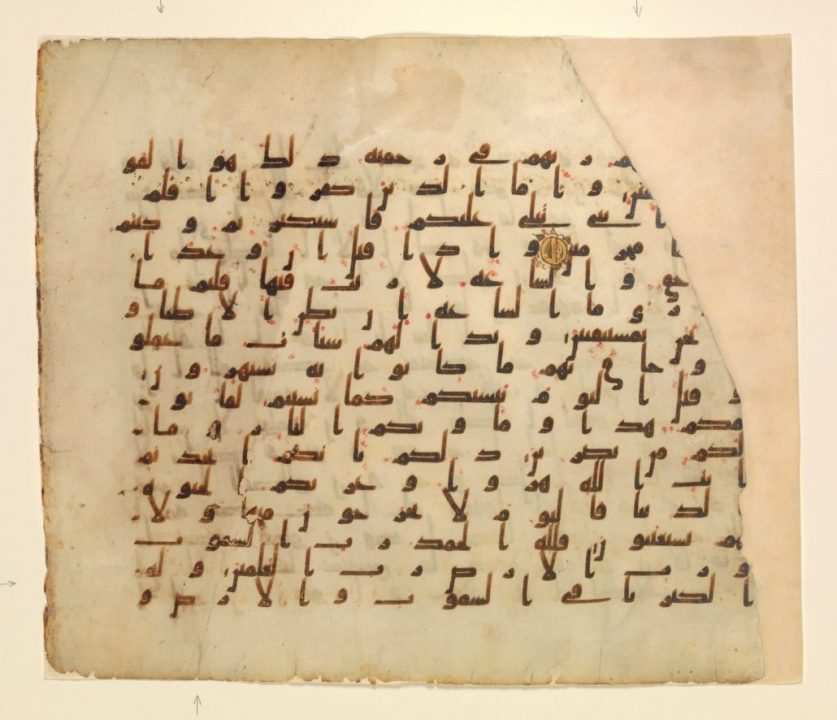
This eighth- or ninth-century Qur’an was written in a script that is characterized by a rightward slant and by the shape of the vowel ya’ in the terminal position, which turns backward to underline the letters that precede it. Like other early Qur’an manuscripts, the writing here omits consonant points (i’jam), making it difficult for the reader to distinguish between letters with similar forms. Red dots indicate short vowels, and a series of short diagonal black strokes act as verse markers.
Description
Overview
This exquisite folio from a Qur’an manuscript, dating from the late 8th to early 9th century, is a remarkable artifact that provides a glimpse into the early transmission of the Qur’anic text. Written in a distinctive script that features a rightward slant, this manuscript exemplifies the early calligraphic traditions that shaped the visual representation of the Qur’an. Notably, the unique shape of the vowel ya’ in terminal positions, which curls back to underline preceding letters, adds an artistic flair to the text. The absence of consonant points (i’jam) in this early manuscript presents a challenge for readers, as it requires a deeper understanding of the Arabic language to accurately interpret the script.
In addition to its aesthetic qualities, the folio employs red dots to indicate short vowels, while a series of short diagonal black strokes serve as verse markers, guiding the reader through the sacred text. This manuscript not only serves as a testament to the evolution of Qur’anic writing but also reflects the historical and cultural contexts in which it was produced. The careful craftsmanship and attention to detail evident in this folio highlight the reverence with which the Qur’an has been treated throughout Islamic history.
Key Themes
- Historical Significance: A window into the early Islamic period and the development of Qur’anic manuscripts.
- Calligraphic Art: Showcases the beauty and complexity of early Arabic calligraphy.
- Language and Interpretation: Highlights the challenges of reading early Arabic scripts without diacritics.
- Cultural Heritage: Represents the artistic and scholarly traditions of the Islamic world.
Who This Folio Benefits
- Students of Islamic Studies: For those studying the history of the Qur’an and its manuscripts.
- Calligraphy Enthusiasts: Individuals interested in the art of Arabic calligraphy and its evolution.
- Linguists: Scholars examining the development of the Arabic language and script.
- Cultural Historians: Researchers exploring the cultural and historical contexts of early Islamic society.
- Collectors and Curators: Art collectors and museum curators interested in acquiring or preserving significant historical artifacts.