Folio from a Quran Manuscript probably 9th century
Folio from a Qur’an Manuscript probably 9th century
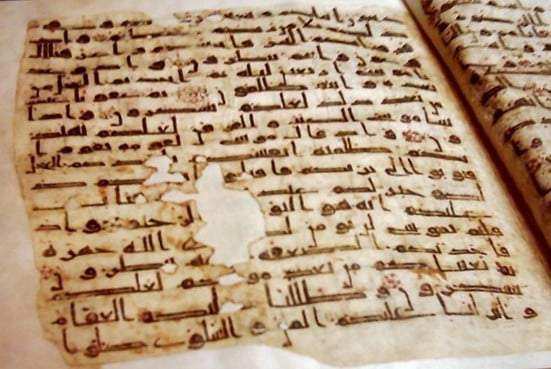
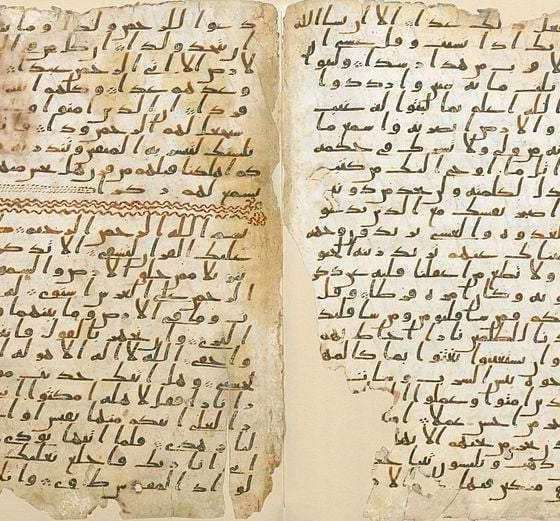
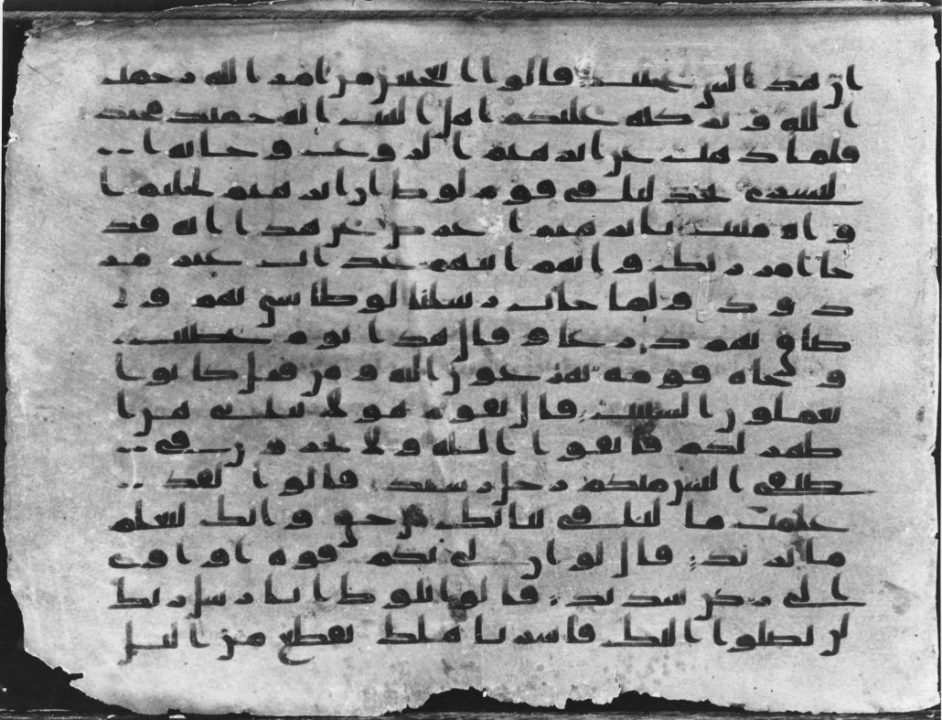
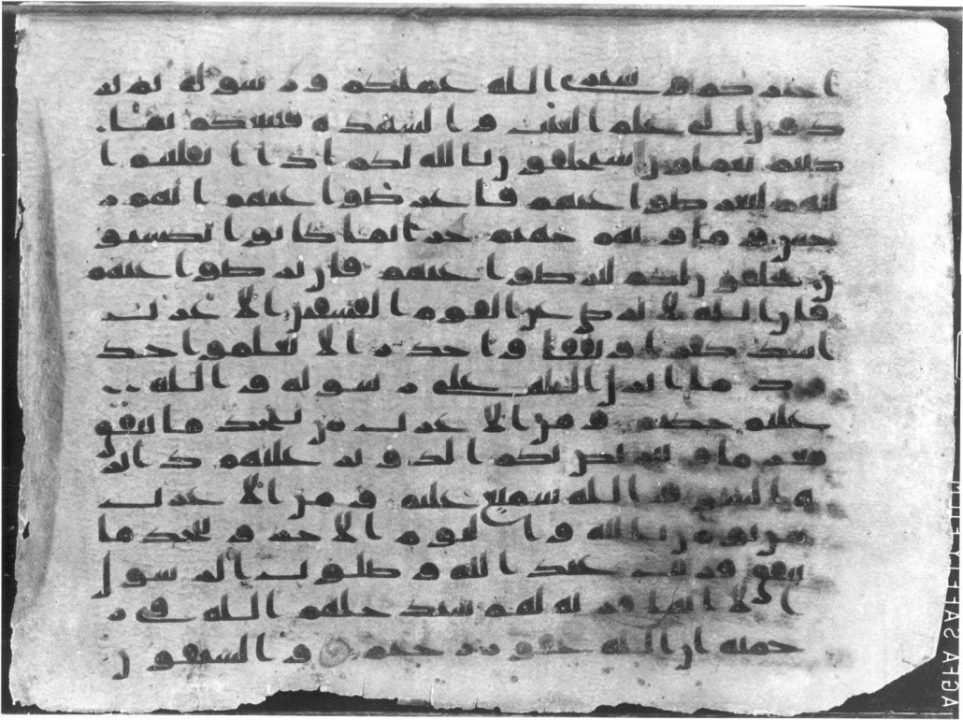
The tradition of dyed manuscripts developed in Byzantium for making valuable books, such as the Gospels. The technique continued into the early Islamic period, with the Blue Qur’an as its most spectacular manifestation. Tinted pages were used only in the most luxurious manuscripts, for they required extra work in preparing the already expensive parchment with precious pigments. Here, pages dyed red support a dense, regular script completed in a plain ink. This folio can be dated to the early Islamic period thanks to its simple kufic calligraphy. This script lacks the vowels or diacritical marks typical of the later, more developed written form of Arabic.
Description
Overview
This exquisite folio from a Qur’an manuscript, believed to date back to the 9th century, exemplifies the rich tradition of manuscript artistry that flourished during the early Islamic period. The practice of dyeing pages, which found its origins in Byzantine culture for creating valuable texts such as the Gospels, was adopted and adapted by Islamic scribes. The most notable example of this tradition is the renowned Blue Qur’an, but this folio showcases a striking red dye that enhances the beauty of its dense, regular script. The simplicity of the kufic calligraphy, devoid of vowels and diacritical marks, reflects the early stages of Arabic script development and offers a glimpse into the evolution of Islamic written expression.
Artistic Significance
The meticulous craftsmanship involved in preparing this luxurious manuscript is evident in the careful application of precious pigments to the already costly parchment. The use of tinted pages was reserved for only the most opulent manuscripts, making this folio a remarkable artifact of its time. The combination of the rich red background and the plain ink script demonstrates a harmonious balance between form and function, allowing the text to take center stage while still being enveloped in an aura of elegance.
- Art historians and manuscript scholars seeking to understand the evolution of Islamic calligraphy and manuscript production.
- Collectors of rare and historical Islamic artifacts looking to enrich their collections with a significant piece.
- Students and researchers studying the historical context of the Qur’an and its manuscript traditions.
- Individuals interested in the intersection of art, culture, and religion in the early Islamic period.
- Libraries and institutions focused on preserving and showcasing Islamic heritage and literature.